
Octopus in Mainstream: Sukant Goel on Craft & Refusing the Box

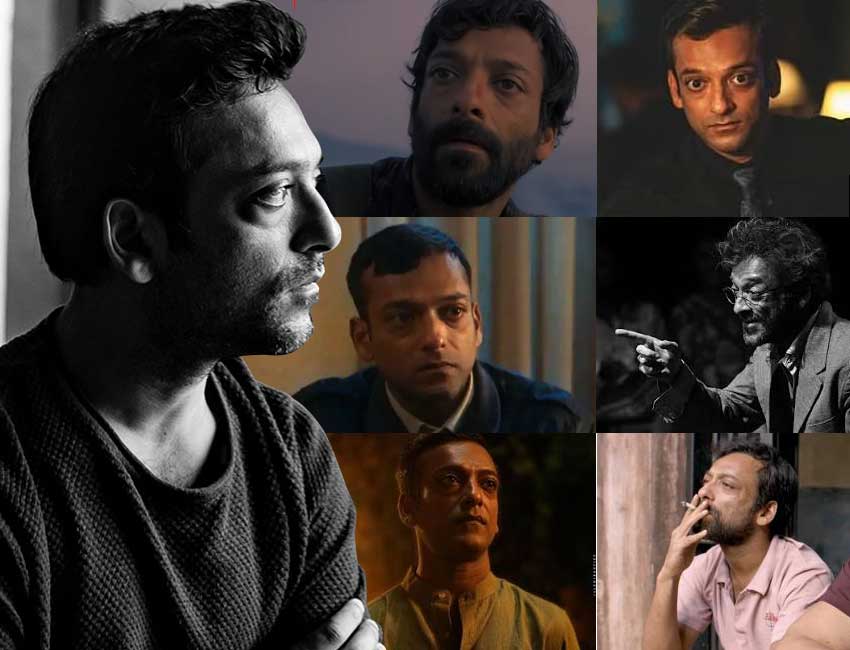

From gripping streaming hits and indie gems to the world’s largest travelling film festival, actor Sukant Goel has quietly built a body of work that defies linear trajectories. In a candid, free-flowing conversation with Manjulaa Shirodkar, the versatile performer dives deep into his character choices, the psychology of his morally grey roles, and why staying an artistic outsider remains his greatest asset.
Sukant Goel, one of the most under rated actors of our times is in the news again. His latest film, Last Man in Tower co-starring Manoj Bajpayee, Boman Irani and Divya Dutta has Goel playing a key role in it – that of Masterji aka Bajpayee’s son. The film which had its theatrical release on 11 September, comes at an opportune time for Goel whose two other films, Ananyabrata Chakraborty’s Kaisi Yeh Paheli and a short film Iss Beech directed by Mustaqeem Khan and Saurabh Vyas starring Shweta Basu Prasad and Anuj Choudhry are also being screened at the ongoing Jagran Film Festival (JFF 2026) – the world’s largest travelling film festival.
Despite no formal training in acting, Goel has worked in every medium available to showcase his prowess as a performer. From web series such as Kaala Paani, to Empooran – the Malayalam blockbuster, Wasan Bala’s Monica O My Darling to shorts such as Iss Beech, theatre and more feature films like Anurag Kashyap’s Bandar, Goel has been softly but surely been leaving his distinct signature across the board. He has not had a linear trajectory from Point A to Point B – instead it has been more like that Octopus which spreads its tentacles in all different directions.
In a free-flowing conversation with Manjulaa Shirodkar, Sukant unveils his thoughts on the films he has been a part of and his thoughts on prepping for roles and cinema in general.
Manjulaa: Tell us more about this journey..
Sukant: “I’ve been lucky to have people around who through art, theatre, cinema and even journalism have kept me grounded and close to reality. So that if I waver away from it, or do something which is avoiding the reality or away from the truth – then I am very aware of it. So a lot of things are like, ‘I don’t want to be part of this’.
Manjulaa: You’ve done regional cinema, web series, shorts, features, theatre…
Sukant: I would love to do a more regional work if I can fit in. I’m not trying to do things just because the film is good or they (makers) do good work. It shouldn’t feel that I’m inserted here deliberately or just because somebody thinks that you can do it. Your trip shouldn’t be that. It’s not like an actor can’t do it but there should be enough going for me. That when somebody watches it, they will not the question where is this coming from? They can criticise the performance sure, but it shouldn’t seem like forced.

Manjulaa: Let’s talk about Chiro – your character in Kaala Paani, which was another level. Chiro has a very interesting character graph – how it develops, how it moves through the plot. Because as a viewer always second-guessing his persona. As audience you’re kind of wondering about those grey shades, and then there aren’t. Sometimes he’s just a nice guy. Sometimes he’s looking out only for himself. He has a lot of those greys.
Sukant: That (nuance) is definitely down to the writing. It was written like that. It’s the draft. Its movement was completely written into the script, that and the father’s part. I think the script was very, very well written and was summing up these characters and their problems and their conflicts very, very well. And so, it was just about understanding that and catering to that as much as possible. So whatever people said about the character, his psychosis or guilt and what that guilt makes him do or what happens when the tragedy strikes for him. It’s so very rich and everybody believed in the script.
Manjulaa: In most of the characters you’ve played – be it in Monica, Kaala Paani, Kaisi Yeh… Iss Beech what’s interesting is that you’ve always been bordering on the dark side – sort of the antagonist, who keeps the audience hooked. And even in Empooran yours was a villainous character. Do you gravitate towards these scripts, or do you think you’ve been typecast?
Sukant: No, I don’t think typecast has happened, yet. Whatever I’ve done, I find them quite different. Yes, they probably lie in on the good and bad side of things in a larger bracket – together but as human beings, they’re all quite different. Their predicaments are different, and the filmmakers are very different. So for me, because it’s important to understand who I am working with, how they are envisioning things. That gives me confidence. I haven’t really consciously chosen all these roles. I don’t have that luxury even now. Still, people are quite reluctant to sign on my name. which does bother me. I have a little ego about that. Yes, I have confidence in my abilities. Clearly I feel like I can do a lot more but I need trust. Um, on the maker.
But also, if the director and the casting director think that this actor can do this part, which is tricky which will require some another kind of fun, then I’m happy to jump on that challenge. Then I know that if that’s done, then they will stay – those characters.
Manjulaa: You’re not fond of running around trees and singing songs?
Sukant: I would love to that stable character; the good people but the predicaments and the telling should be fun – in the script. If it’s the same thing packaged differently, then I am not interested. Then there are other people who will probably look better on screen, do it better. If it has to be me, then it should be told differently. It will have to be something that excites me – more than just being there.
Manjulaa: In Kaisi Yeh Paheli, there is this scene where Uttam shifts from trying to understand his troubled relationship with his mother to suddenly exploding after a gentle interruption from Rasika. This unexpected reversion to his aggressive self was a shocking double-take moment for me. Was this your improvisational choice or was it explicitly detailed in Ananyabrata’s script? It is a beautiful moment in the film, dark as it is.
Sukant: So, this is the scene that got me while I was reading the script because I was looking for what is there (in this character)? What is it? Where is this character going? What is he about? And then there’s something. And then he’s gone against. And then he suddenly says to Rasika, “Can you just stop speaking?” Ok, he’s human. He has no therapist, he’s not doing meditations. He’s just a human being who’s is vulnerable at this point but just doesn’t know how to be around women (and doesn’t know what to do) when somebody comes too close. He can’t take it.

I certainly found that interesting and we spoke about it a lot. Ananya(brata) really helped in understanding what is this relationship between mother and son because at the core if that doesn’t work for me at the script level, the film has nothing else to offer. The emotional core is that. So he explained the psychology of this guy and why is he talking to his girlfriend. What is that moment? And she’s running outside her marriage. And that line, that moment was identified. How sharp it was going to be was more in the moment when we are performing. I don’t know if he imagined it to be that sharp but the writing suggested that something’s happening here, something’s breaking. While performing the scene, they have an edge to that.
Manjulaa: It is very harsh moment. You can feel it like a slap.
Sukant: And then you also wonder about the woman. ‘Why she going on with this?’ What is it about women in such scenarios that is still… it’s very human. It doesn’t satisfy you, your idealism. Okay, okay, now the feminist things that she would say, ‘to hell with you or how dare you talk to me like that?’ but that doesn’t happen. But in that moment (as an actor) you’re not thinking all this. I think it propels that moment and that scene was talked about a lot, even with the DOP and in Sikkim (where the film was shot). It was one of the last scenes we shot. And I would keep talking to Leena Patoli (the DOP) every night, after the shoot, and she would say, ‘how do you imagine that scene?’
Manjulaa: Any other scenes that particularly stay with you from the films that you have done – like in Anurag Kashyap’s Dobaara, your character has that comic streak and then Bandar where you play this prisoner who is the do-gooder while carving a little niche for himself, almost a parallel antagonist – who is also wary of the main villain! He keeps the audience guessing…as to whether he is genuine or ..
Sukant: So Anurag and I, we were supposed to do Maximum City. It was supposed to be a 3-film series where I was going to play Suketu Mehta. The process was on but it didn’t happen. But we did have Abhishek in Dobaara even though my character wasn’t in the original Spanish film Mirage. But Anurag wrote in the character of Abhishek saying that, ‘I want to dismiss the idea of this film (which is of parallel worlds) through Abhishek’. This is the ‘one character who needs to dismiss it and say, what nonsense’. This guy is a bookshop seller. He wrote 6-7 page long scenes, where this chap is constantly chattering and we shot it accordingly. He also managed to give me the script 2 days before. Normally doesn’t give it. He generally goes, ‘isko yeh wala scene toh de de…’
But I had already read the script because I’d asked his AD!
On the day of the shoot just before the first day Anurag came to me and whispered, ‘Sukant, Utpal Dutt, Utpal Dutt’. That was significant because Hindi cinema has reduced Dutt to a caricature whereas he was actually so versatile. So he said, ‘Look at him and that brought me in into the scene immediately and it (turned out to be) very enjoyable. Again, it was the filmmaker’s vision and idea and that clarity always helps. Even for Monica Vasan told me, ‘You focus on your love for this girl. It’s your love story and then whatever happens, happens.’ And I thought about how I could be invisible. And the camera and editing takes care of that as well. It takes care to place you in positions where you seem invisible and then the main scene opens up. Vasan would give me enough space to figure it out on the set. Pick up an object if I wanted to, do things, dance if I wanted to, not show my face in a frame if I didn’t want to. And even Rajkkumar (Rao), it was very easy to work out a scene together with him. It never felt like ‘resistance or I know better’. A lot of things have to work actually to create a good performance of an individual actor.
As long as I’m aware of that I am fine. That it’s not just me. Some actors come really prepared and they aren’t malleable at all on set. Then some other language is happening in that scene… and in Kaala Paani, for instance, if I did some prep work for the character, I still had to be flexible enough, the way I spoke, even though I changed a lot of words (like local dialect), prepped linguistically etc, but I still have to make sure that the binding lines for the next actor’s line or my line should be similar to as Biswa (Biswapati Sarkar, one of the writers of Kaala Paani) has written them because there is a rhythm to it. So that on shoot it still marries together…. You have to exercise that intelligence, so that it doesn’t destroy the colour of the scene, what is in the scene itself.
Manjulaa: So what you’re saying is that while you are acting out what has been shared with you in the script, a parallel thought process of a director from the theatre background is constantly at work. To give the other actors the space to be able to do their lines, so that your performance gets better. There is always the director in you, who is observant of what the actor Sukant is doing? Is that what you do when you’re prepping for a role?
Sukant: As I started doing more and more theatre and I think somewhere around the time when I started working with Sunil Shanbag in 2014, my mind really opened up to idea of performance and how to understand a script, how to read a script, and then understand what needs to be done to bring it out. So this is all as an actor, not as a director. I think the actor’s job also is to look at a role from different perspectives, looking from the co-actor perspective, their line, or what is the other actor doing? I’m not sure that it’s my director’s mind doing that. My director’s mind would look at it in how it has to be shot, say, what can we do? How can we imagine it differently? But within the scenario of the shoot, it’s still my actor mind figuring all these things out.


Maybe some actors don’t do it and maybe some actors do it but it’s become my practice for sure where I read a scene and I’m trying to figure what is happening in the scene. Where do I step in? What do I need to do? What am I doing to the other person? What can I do to help that person come back at me. And in the whole scene, how much effort do I need to put in? In the whole film how much silence have I made? So is this where you speak? When you hear him speak for the first time, how much speech should it be? What kind of speech should it be? Or what is the outburst of guilt? When you’ve seen the person harm so many people, so it’s all I think still the actor and not the director.
In theatre yes, definitely. The director mind is more active because all the controllables are in front of you on stage. In film, it’s actually like it somewhere else I’m just going to come in later. So I should not think territorially there all. Because I really don’t know what this frame is doing and I hardly ever go and check the takes.

In film, I try and keep that director mind out. In theatre yes, also because now directors are also looking for inputs. It’s collaborative and they also know that okay, Sukant has done bit of work and he thinks like that, so we can jam on that. Theatre mein that thing is definitely active and fertile, but not so much in film. In film, only sometimes, very rarely when the director has asked, how do you think we should do this scene?
But yeah, that’s been more on some short films. Where you’ve come into the process much earlier, it’s not so isolated that you have to come and perform a job and go. It’s more collaborative, when it’s more, it’s smaller, right? So these kind of interactions happen more in either Indie films or in shorter films, in the commercial setups.
Manjulaa: Speaking of short films Mustaqeem Khan and Saurabh Vyas’ Iss beech (In Between) stands out. The 30-minute film co-stars Shweta Basu Prasad and Anuj Choudhury while you play the insecure husband who is unable to voice his unhappiness. The quiet manner in which you brings nuance to this sensitive role is remarkable with Shweta and Anuj playing perfect foils.
Your presence is disquieting even in Anurag Kashyap’s Bandar which didn’t work at the box-office at all. It may have lost out on account of its open end but it will be remembered for some memorable performances given by co-actors like Bobby Deol and Jitendra Joshi who plays a corrupt cop and you, an undertrial who tries very hard to help Samar Mehra who has been framed in a rape case by his girlfriend. What was it like working with Bobby?
Sukant: So, the film has been written by Abhishek Banerji and Sudip Sharma – both of whom are very, very intelligent. And I thought it would be interesting to see Anurag direct someone else’s writing for a change. So they had already shot first half of the film and we (the undertrials) had to come in the second half. In fact, some portion of the film had been edited too. The first half is in a police station and the second half is in the jail. So, most of the actors are completely different. And we were shown the first half and I was like this seems very interesting.
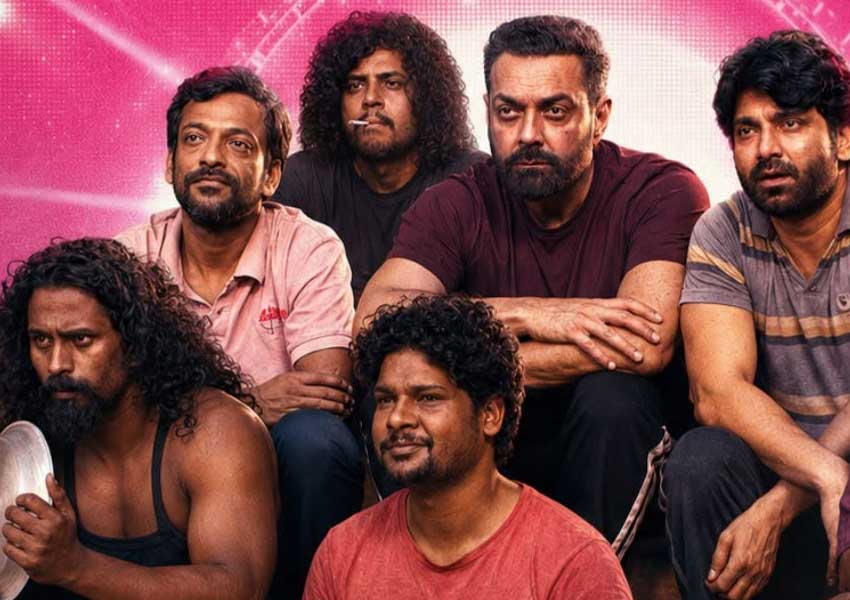
Anurag had got like some 100 odd theatre actors to be the undertrials in the jail. And all of us would live in that jail setup in the day and even Bobby wouldn’t have his slippers on. Just be there casually on set. He’d be in the same set up as us and he had done enough work on the first half to just take it all in and just be. And he was performing like that and it was fun to see that. He was saying that first day was a little difficult but the second day on, he surrendered completely. I think he’s is on a very interesting journey right now as a person and as an actor. Honest journey, which is rare in that realm.
As the conversation draws to a close, what stands out most about Sukant Goel is his quiet, almost fierce commitment to remaining an unassailable outsider in an industry obsessed with categories. In a landscape that routinely favours predictable stardom over artistic curiosity, Goel’s refusal to play it safe – or play by the rules – feels less like a career strategy and more like an act of defiance.
For an actor who candidly admits to wanting more trust from an industry that often takes time to spot true depth, the sheer weight of his output speaks louder than any promotional fanfare. As Last Man in Tower commands space on the big screen and his showcase at JFF 2026 reaffirms his extraordinary range, Sukant Goel remains exactly where he wants to be: firmly outside the box, entirely on his own terms.
What's Your Reaction?
