
When “No” Becomes a Threat: The Danger of the Male Ego

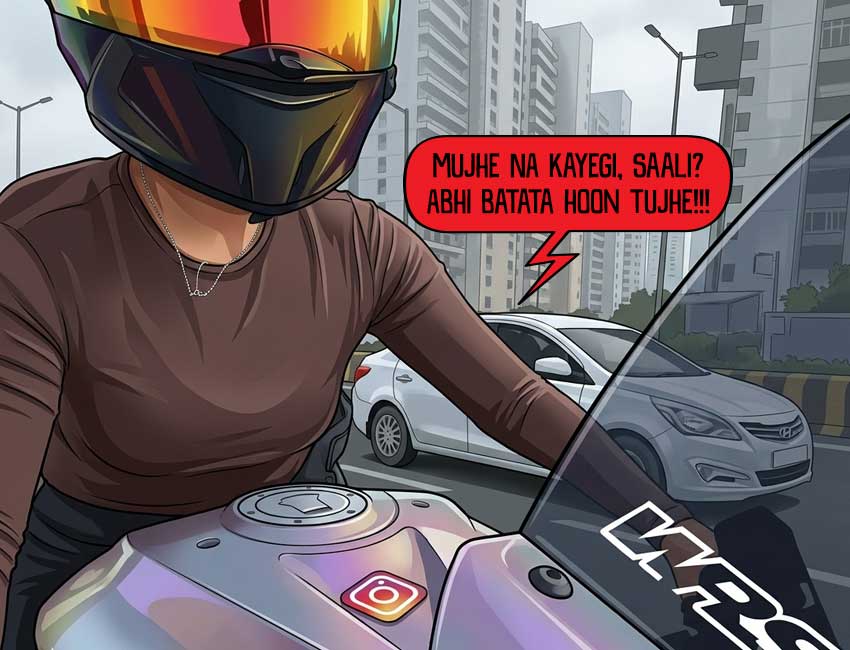

Exploring the lethal intersection of entitlement and fragile masculinity, Dr Srabani Basu investigates the destructive mechanics of the male ego. When a woman’s simple refusal is perceived as an unforgivable affront, everyday rejection tragically curdles into retaliation.
There are words in human language that are grammatically tiny but psychologically enormous. “No” is one of them. It contains only two letters, yet it establishes a boundary, withdraws permission, asserts autonomy and reminds the person hearing it that another human being exists outside his control. For most psychologically secure adults, a refusal may disappoint, irritate or embarrass, but it remains a refusal. For a particular kind of fragile, entitlement-based masculinity, however, a woman’s “no” can undergo a dangerous psychological transformation. It is no longer processed simply as “I cannot have what I want.” It becomes “How dare she deny me what I want?” At that point disappointment can become humiliation, humiliation anger, and anger retaliation. The distinction is crucial, because what is commonly called the “male ego” is not masculinity itself. It is better understood as a particular convergence of entitlement, threatened status, dominance expectations and an inability to tolerate loss of control.
Few Indian cases demonstrate the catastrophic potential of this transformation as starkly as the murder of Jessica Lal. On the night of 29–30 April 1999, Jessica Lal was serving as a bartender at a party at the Tamarind Court restaurant in Delhi. According to the prosecution case subsequently accepted by the courts, Siddharth Vashisht, better known as Manu Sharma, arrived with friends at about 2 a.m. and asked for drinks. The party was over, and liquor was no longer being served. Jessica Lal and others explained this. Sharma was refused. He took out a pistol, fired one shot at the ceiling and another at Jessica Lal, striking her near the left eye. She died. After a controversial trial and acquittal at the trial-court stage, the Delhi High Court convicted Sharma in 2006, and in 2010 the Supreme Court upheld his conviction for murder. The Supreme Court judgment records the fatal sequence with devastating simplicity: request, refusal, gun, death. The disproportion between stimulus and response is precisely what makes the case psychologically significant. A woman denied a man a drink; a man responded by extinguishing her life.
Twenty-seven years later, another incident raises unsettlingly familiar questions, although it is essential to distinguish an established murder conviction from an ongoing criminal investigation. On 13 September 2026, 27-year-old motorcyclist Shivani Chauhan, known as Sia, was riding with fellow bikers on Gurugram’s Golf Course Road when a car driven by Kalyan Bainsla allegedly pursued the group and struck her motorcycle. Video footage reported by The Indian Express shows the car tailing the riders, changing lanes and colliding with Chauhan’s motorcycle. Chauhan alleges that the occupants had been harassing her, gesturing at her and repeatedly asking her to stop; she says she refused to pull over because she feared for her safety. Bainsla has disputed the allegation of intentional ramming, saying that members of the biker group had been “pinching” his vehicle and that the collision was accidental. Police, after examining CCTV footage and recording Chauhan’s statement, added an attempt-to-murder charge under Section 109 of the Bharatiya Nyaya Sanhita, along with provisions concerning stalking and insulting the modesty of a woman. As of 17 September, Bainsla and his cousin had been remanded to police custody and the investigation remained active. It would therefore be irresponsible to diagnose Bainsla or state definitively that wounded male ego caused the collision. What can legitimately be examined is the behavioural pattern alleged in the case and why such encounters resonate with a well-established psychological literature on rejection, entitlement and aggression.
What connects these situations conceptually is not alcohol, a nightclub, a motorcycle or a road. It is the possibility that a woman’s autonomous decision is interpreted by an entitled man as a challenge to authority. Jessica’s refusal concerned a drink. Chauhan says that she refused to stop when signalled to do so. Neither act should require courage. Both belong to the mundane territory of personal agency. Yet this is precisely where the psychology of gendered entitlement becomes important. Entitlement says, “My desire creates an obligation in you.” Healthy desire recognises another person’s freedom; entitlement experiences that freedom as obstruction. Once desire has silently been converted into perceived right, refusal can feel not merely disappointing but illegitimate.
Psychologists have studied a related phenomenon through the concept of masculine honour beliefs. Research published in Personality and Individual Differences examined attitudes towards men responding aggressively after romantic rejection. The researchers found that stronger endorsement of masculine honour beliefs, that the idea that a man must defend his reputation against insult or disrespect, was associated with greater acceptance of aggressive responses to rejection. The significance extends beyond romance. If masculinity becomes psychologically dependent upon being obeyed, respected, deferred to or never publicly diminished, another person’s independence can acquire the emotional meaning of an attack. The woman may simply be exercising choice; the threatened individual experiences status loss.
This helps explain why the colloquial phrase “hurt ego” is insufficient. What is threatened is not simply vanity. Psychologists have long investigated what has been termed threatened egotism: aggression may emerge not necessarily from low self-esteem but when an inflated or unstable positive self-view collides with external contradiction. In everyday language, the dangerous equation becomes: I believe I deserve compliance + you refuse compliance = you have humiliated me. Revenge then functions as an attempt to reverse the hierarchy. The retaliatory act communicates, “You may have exercised power over me for a moment, but I will demonstrate who actually possesses power.”
The emotional hinge in this process is frequently humiliation. Shame says, in effect, “Something about me has been diminished.” Anger provides a convenient psychological escape by relocating the problem outside the self: “You diminished me; therefore, you deserve punishment.” Revenge can consequently operate as a primitive mechanism for restoring injured status. Instead of metabolising frustration internally by accepting embarrassment, disappointment or loss, the individual externalises it through aggression. The woman becomes responsible not merely for what she did, but for what the man felt when she did it.
Experimental psychology provides disturbing evidence for another part of this mechanism. A series of six studies involving 1,516 participants, published in the Journal of Personality and Social Psychology, investigated why social rejection can lead to aggression. The researchers found evidence that retaliatory aggression can temporarily improve the rejected person’s emotional state. In other words, revenge may provide a short-lived psychological reward: after feeling diminished, the aggressor experiences the restoration of agency through hurting someone else. This does not mean that rejected people inevitably become violent: overwhelmingly they do not. It means that for individuals already predisposed towards aggression, retaliation can function as maladaptive emotional regulation: I feel bad because you rejected me; hurting you makes me feel powerful again.
Gender becomes particularly important when entitlement intersects with beliefs about hierarchy. Research on heterosexual men’s responses to romantic rejection has found that higher social dominance orientation, that is considered a preference for hierarchical relations between social groups, was associated with greater tendencies to blame women for rejection and with self-reported persistence, manipulation, aggression and threats in response to previous rejection. Other experimental work has found links between hostile masculinity, sexual dominance motives, hostile perceptions of women and aggressive responses following sexual rejection. Again, these findings should never be translated into the crude proposition that men are inherently violent. They indicate something more socially consequential: certain beliefs about masculinity, dominance and women can increase the risk that female autonomy is perceived as provocation.
Recent research makes the pattern even harder to dismiss. A 2026 study examining aggressive retaliation to online romantic or sexual rejection analysed accounts from Canadian university students. Among participants who reported having rejected someone online, 47.7 per cent said they had experienced what they regarded as aggressive retaliation; where the sender’s gender could be identified, 93 per cent of those sending the aggressive responses were men. The responses ranged from disparagement and repeated harassment to threats. Particularly revealing were themes involving entitlement to consent and the desire to hurt the person who had rejected them. The study concerns a particular university-based sample and online interactions, so its percentages should not be generalised to all men or all societies. Its psychological pattern, however, is striking: rejection becomes grievance, and grievance becomes justification for retaliation.
There is also an important difference between ego strength and ego fragility. Popular culture often mistakes domination for confidence. Psychologically they may be opposites. A secure sense of self can survive contradiction. It can hear “no” without experiencing annihilation. It can lose an argument, be overtaken on a road, be refused attention, watch a woman walk away, or be told that the bar is closed without requiring restoration through punishment. Fragile identity requires continuous confirmation from the outside world. When masculinity itself is organised around never appearing weak, never being challenged and never “losing face,” everyday frustration can acquire existential dimensions. The problem is therefore not that the ego is too strong. It may be that it is too brittle.
The gendered dimension becomes especially disturbing when women enter spaces culturally coded as male. A woman behind a bar exercises authority over service. A woman riding a high-performance motorcycle occupies a road culture still frequently associated with masculine identity. Chauhan herself has described feeling unsafe as a woman rider after the incident, while other women bikers interviewed subsequently described staring, unsolicited comments and being underestimated on the road. None of this proves the motive of the accused in her case. It does, however, illuminate the social environment in which women can be perceived not merely as occupying public space but as transgressing expectations about how they should occupy it.
Perhaps the most revealing question, then, is not “Why are some men violent towards women?” but “What does a woman’s autonomy mean to a man whose identity depends upon her compliance?” If her autonomy registers as humiliation, then her independence becomes psychologically dangerous to him. Her “no” becomes insolence. Her indifference becomes insult. Her competence becomes competition. Her departure becomes betrayal. Her refusal to stop becomes defiance. Her ability to exist without seeking his approval becomes an affront to a hierarchy he may never consciously realise he believes in.
This is why the expression “male ego” needs interrogation rather than casual repetition. There is nothing uniquely male about having an ego, experiencing rejection, feeling humiliation or becoming angry. Women experience all of these. Nor do most men retaliate violently when refused. The relevant psychological danger emerges when masculinity is fused with entitlement and dominance, emotional vulnerability is experienced as shame, and aggression has been learned as an acceptable means of restoring status. A major 2026 review in Nature Reviews Psychology similarly emphasises that men’s violence against women cannot be reduced to a single psychological cause; it emerges from interacting individual, relational and broader social influences. Any serious explanation must therefore resist both biological fatalism, that “men are simply like this” and simplistic individualism, that “one bad man lost his temper.”
The phrase “crime of passion” has historically obscured this distinction. Passion does not pull triggers, stalk women, throw acid, ram vehicles or issue death threats. Human beings make behavioural choices within psychological and cultural systems that can either inhibit or legitimise aggression. Calling retaliatory violence “passion” can inadvertently romanticise what is often better understood as a crisis of entitlement and control. The critical question is not how intensely the aggressor desired something. It is why he believed another person’s refusal entitled him to punish her.
Jessica Lal’s murder remains particularly haunting for precisely this reason. There was no profound interpersonal betrayal preceding the killing. There was no collapsed marriage, custody battle or years-long feud. At its centre was something astonishingly ordinary: a bartender telling a customer that alcohol would no longer be served. That ordinariness strips away many of the narratives through which violence is sometimes rationalised. The Supreme Court record leaves us confronting an unbearable disproportion, and that is, a boundary was stated, and a life was taken.

The Gurugram case must await investigation and adjudication before conclusions about criminal intention or personal motive can responsibly be drawn. Chauhan’s allegation that she was pursued after refusing to stop, harassed and deliberately struck, forces society to confront the same larger question from another direction. Police say their decision to add the attempt-to-murder provision followed examination of CCTV footage; the accused maintains that the collision was accidental. Both facts matter. Psychological analysis should illuminate possible behavioural mechanisms, not replace evidence or a court verdict.
Ultimately, perhaps the most dangerous form of male ego is not the man who thinks highly of himself. It is the man who requires a woman to think less of herself so that he can continue thinking highly of himself. He requires accommodation to experience authority, silence to experience respect, submission to experience masculinity and compliance to experience worth. A woman who refuses therefore does something far more psychologically disruptive than denying him a drink, a telephone number, sexual access, attention or right of way. She demonstrates that his desire does not govern her existence.
And therein lies the deeper cultural problem. We teach women elaborate strategies for saying no safely: soften the refusal, smile while refusing, invent a boyfriend, avoid provoking him, share your live location, do not travel alone, do not argue, do not make eye contact, do not embarrass him publicly. Notice what this architecture of precaution quietly accomplishes. It transfers responsibility for managing male aggression onto women. Instead of asking why a woman failed to refuse safely, perhaps society should ask why some men were never taught to receive refusal safely.
The psychological revolution required is therefore deceptively simple. Boys do not merely need to be taught to “respect women.” Respect can remain paternalistic if women are respected only when they behave according to prescribed expectations. They need to learn something more fundamental: another human being’s autonomy is not an evaluation of your worth. A woman who refuses you has not emasculated you. A woman who disagrees with you has not dishonoured you. A woman who surpasses you has not diminished you. A woman who does not stop when you command her to stop has not stolen your authority, because authority over her was never yours.
Perhaps that is the sentence at the heart of the entire discourse.
Her “no” did not take away his power. It merely revealed the power over her that he had mistakenly believed was his.
What's Your Reaction?