
OLO: The Colour You’ve Never Seen

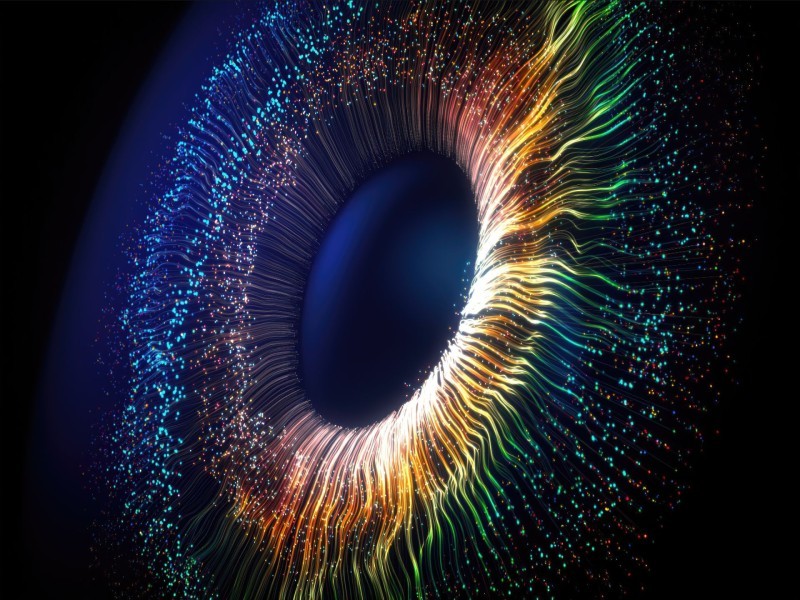

Scientists claim to have discovered a brand-new colour no human has ever seen before — meet “olo”, the blue-green hue that’s baffling brains and challenging the rainbow. A witty look at the science, the sceptics, and the spectacle.
In what might just be the most bonkers discovery since someone decided it was a good idea to momo with chocolate, a team of rather clever American scientists have claimed to uncover a colour that no human has ever laid eyes on. Yes, you read that right — a brand-new colour. Not a shade, not a tint, not a cheeky remix of teal and turquoise. A whole new colour. And what have they called it? Brace yourself… olo.
Now, if you’re wondering whether olo is a new kitchen appliance from IKEA, or the sound your toddler makes when discovering the phone, you’re not alone. But according to the boffins behind the experiment, olo is a blue-green hue so mind-meltingly saturated, it makes emerald look like it’s had one too many Pimm’s and needs a sit-down.
The mastermind behind this ocular caper is Professor Ren Ng of the University of California — yes, the one with all the palm trees and people who wear sunglasses indoors. Alongside four other brave souls (three of whom were fellow researchers, so very much preaching to the converted), Ng allowed lasers to be fired into his eyeballs. The sort of thing most of us would only do after a few pints and a dare from Dave.
Speaking on BBC Radio 4’s Today programme — the natural home for breaking news about the boundaries of visible light — Prof Ng likened seeing olo to someone who’s only ever experienced baby pink stumbling upon ‘red’ for the first time. Which does beg the question — what’s next? Is maroon just a misunderstood burgundy? Is beige actually a figment of our collective dread?
The high-tech device used in this eye-zapping experiment was called Oz, which sounds suspiciously like something from a Marvel origin story. This contraption, made of lasers, mirrors, and enough optics to make a Bond villain blush, allowed the researchers to stimulate a single type of retinal cone cell (the M cone — the one that’s usually sensitive to green) without triggering its L and S chums. Normally, these cones work as a team, like a well-drilled five-a-side squad. But here, the M cone was sent out solo, left to do the colour-conveying equivalent of karaoke without backup vocals.
The result? A colour not found anywhere in nature. A colour your eyes don’t even have the software for. A colour that, until now, lived in the realm of dreams and dodgy modern art.
Of course, not everyone’s convinced. Professor John Barbur of City St George’s, University of London — a man who presumably prefers his colours to play by the rules — says the claim is “open to argument.” Which, to be fair, a way of saying, “Are you having a laugh?”
He argues that perceived colours can shift if you fiddle about with the brightness and sensitivity of the cones — much like how your living room suddenly looks different depending on whether you’re viewing it by candlelight, full sun, or through a mild hangover.

Still, even the sceptics admit the research is a technological tour de force. And Prof Ng and his team aren’t claiming victory just yet. They’re now exploring whether olo might be of use to people who are colour blind — you know, the folks who’ve been trying to work out whether that dress was blue and black or white and gold for the past decade.
So, what does this mean for the rest of us? Well, unless you fancy a laser light show to the eyeball, you’re not likely to see olo anytime soon. But one day, perhaps we’ll all be wearing olo-coloured jumpers, painting our front doors olo, and telling our mates, “It’s not green, it’s olo, darling. Try to keep up.”
Until then, we’ll just have to stick with periwinkle and puce. And hope our eyes don’t feel left out.
At East India Story, we’re not just about what bleeds or leads. We’re about what inspires, surprises, and reminds us all that across mountains, cultures, —there’s more that connects us than divides us.
What's Your Reaction?
