
No Ramsar Sites Yet in Meghalaya

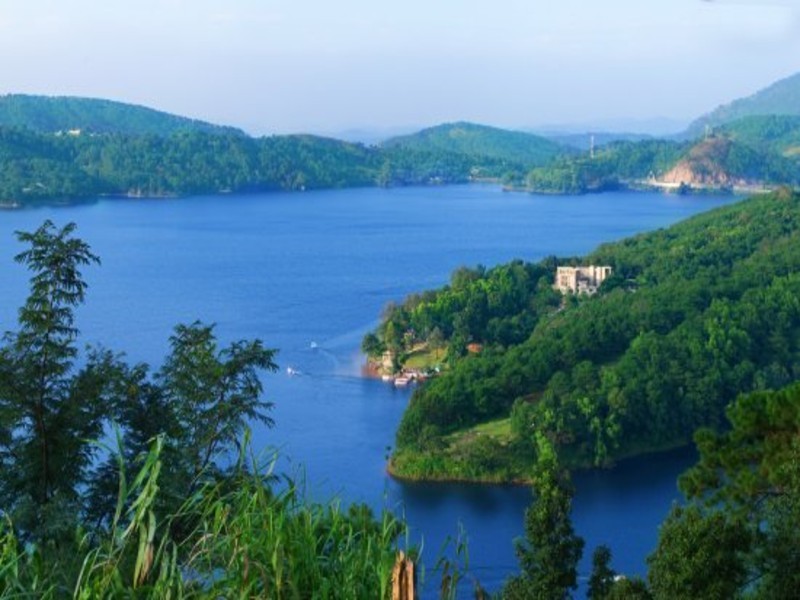

Meghalaya has 225 types of water bodies including lakes, rivers, and wetlands, yet none qualify as a Ramsar site, the State Government tells the High Court. The report was submitted in response to a Supreme Court directive on identifying wetlands for international protection.
In what may be seen as a bit of a damp squib for Meghalaya’s environmental aspirations, the State Government has informed the High Court that none of its 225 water bodies qualifies for the prestigious Ramsar tag. A report submitted by the Chief Conservator of Forests paints a rather detailed—though ultimately disheartening—picture: despite a generous sprinkling of lakes, rivers, and wetlands across the hilly state, not a single one meets the international criteria to be designated as a Ramsar site.
The report, submitted in response to a Public Interest Litigation (PIL) concerning the identification of Ramsar sites, details the water bodies in Meghalaya thus: 66 lakes and ponds, one oxbow-cut-off meander (that’s a U-turn nature never bothered to finish), six riverine wetlands, 18 waterlogged areas, 100 rivers and streams, nine reservoirs and barrages, and 25 tanks and ponds. By all accounts, quite a watery affair.
But alas, as the High Court bench led by Chief Justice JP Mukerji and Justice W Diengdoh noted, the “ground truthing” (which is not some quirky gardening term but rather the verification of data on site) confirmed that none of these qualify for Ramsar recognition. In short, it’s all water, water everywhere, but not a drop Ramsar-worthy.
The matter stems from a directive issued by the Supreme Court last year, asking States and Union Territories to put their best wetlands forward for potential Ramsar designation. The aim? To ensure they’re identified, preserved and maintained in accordance with the global Ramsar Convention—a sort of worldwide gentleman’s agreement on protecting wetlands.
But Meghalaya, it appears, is yet to make the grade. One might say, the state has all the ingredients but has somehow failed to whip up the desired pudding. The report has now been accepted by the High Court, which has directed the Registrar General to file an affidavit on behalf of the State before the Supreme Court, stating the findings in no uncertain terms.

It’s not all doom and gloom, however. The very fact that such documentation and ground verification have taken place shows the wheels are turning—albeit slowly. As the saying goes, “Rome wasn’t built in a day,” and perhaps neither are Ramsar sites.
Whether this development will spur further conservation efforts or leave the matter high and dry remains to be seen. For now, Meghalaya’s rich tapestry of aquatic habitats must carry on without the official Ramsar stamp of approval—rather like a tea without its biscuit.
What's Your Reaction?
