
Chop Chop: When ‘Development’ Leaves No Trees Standing

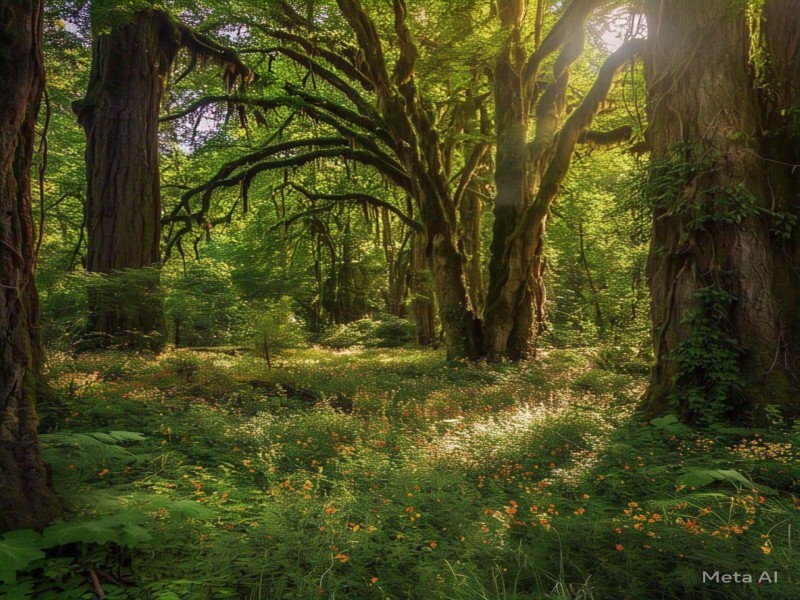

A satirical critique of the plan to fell over 4,000 trees in the Garo Hills for widening National Highway 127B under the Bharatmala Pariyojana.
In the latest chapter of How to Lose a Forest in Ten Days, over 4,000 trees — yes, actual trees, not those cardboard cut-outs from children’s school plays — are about to be given the axe in the verdant Garo Hills, all in the name of progress. The Ministry of Environment, Forest and Climate Change (MEFCC), bless their paradoxical little hearts, has given its ‘in-principle’ nod to what sounds like a chainsaw-themed episode of Grand Designs. The aim? To widen National Highway 127B, linking Shillong with East and North Garo Hills, and perhaps, unintentionally, linking extinction with efficiency.
The project, wrapped neatly in the grandiloquent garb of the Bharatmala Pariyojana, proposes to bulldoze its way through 34.88 hectares of what is currently home to barking deer, monitor lizards, jungle fowl, and, quite possibly, the last shred of our collective environmental conscience.
Now, before you accuse me of being a sandal-wearing tree hugger with a fondness for lentils, let me assure you: I quite like roads. I’ve even been known to drive on them. But must we always barrel towards ‘development’ like an out-of-control dumper truck on a downhill slope, flattening everything in our path?
Let’s not beat about the bush – mainly because soon there won’t be one left. The forest area in question isn’t just any old scrubland. It’s designated Eco Class-1, or Very Dense Forest – the kind you don’t just stumble upon, like an unused gym membership. These are forests that whisper stories older than any modern highway plan. But no matter. We shall soon replace those tall, oxygen-gifting giants with tarmac, traffic, and the comforting scent of diesel.
What’s more, of the 4,444 trees set to meet their maker, nearly 3,000 have a girth greater than 60 cm – which is to say, they’re not exactly saplings still deciding what to be when they grow up. These are full-grown, dignified, middle-aged trees in their prime. And we’re chopping them down faster than you can say “Environmental Impact Assessment”.
But not to worry! The plan includes the delightful euphemism of “compensatory afforestation”. That’s when, after you’ve incinerated the Mona Lisa, you promise to paint a nice watercolour of a bowl of fruit. A noble attempt, but hardly a fair swap. Planting trees elsewhere is all very well, but how do you replicate a thriving ecosystem, centuries in the making, with the botanical equivalent of IKEA flat-packs?
Of course, there’s no “suitable alternative”, say the authorities. Translation: we looked, but not too hard. Because heaven forbid we ask the question: Should we be doing this at all? But no – onward we march, like ants on espresso, toward a shinier, wider, less forested tomorrow.
Yes, we’ll shave off a few hours of travel. Yes, agro products will zip merrily down the highway. But what about the leopards, the foxes, the wild boar? Are they expected to catch a rickshaw to the compensatory forest 50 miles away?
We’re told this road will “boost tourism”. Marvellous. Come visit the Garo Hills! Formerly leafy, now lumpy with construction debris and the occasional displaced squirrel.

There is, of course, a way to strike a balance between development and conservation. But it involves a thing called long-term planning, a rare beast not sighted in most government offices. Until then, we shall continue to mistake short-cuts for progress, and logging for legacy.
So here’s to NH-127B – soon to be the smoothest road built on the roughest environmental cost. If you’re heading that way, don’t forget to tip your hat to the ghosts of 4,444 trees. They didn’t ask to be part of this project, but they certainly gave everything for it.
Cheers to progress. Chop-chop!
At East India Story, we’re not just about what bleeds or leads. We’re about what inspires, surprises, and reminds us all that across mountains, cultures, —there’s more that connects us than divides us.
What's Your Reaction?
