
Byrnihat Chokes: Time for a Graded Response Plan


A devoted foodie with keen interest in wild life, music,…
Worsening air pollution in Byrnihat demands urgent legal and environmental intervention. Experts from the Centre for Efficient Governance recommend implementing a Graded Response Action Plan (GRAP) in Assam and Meghalaya, drawing lessons from Delhi-NCR’s model.
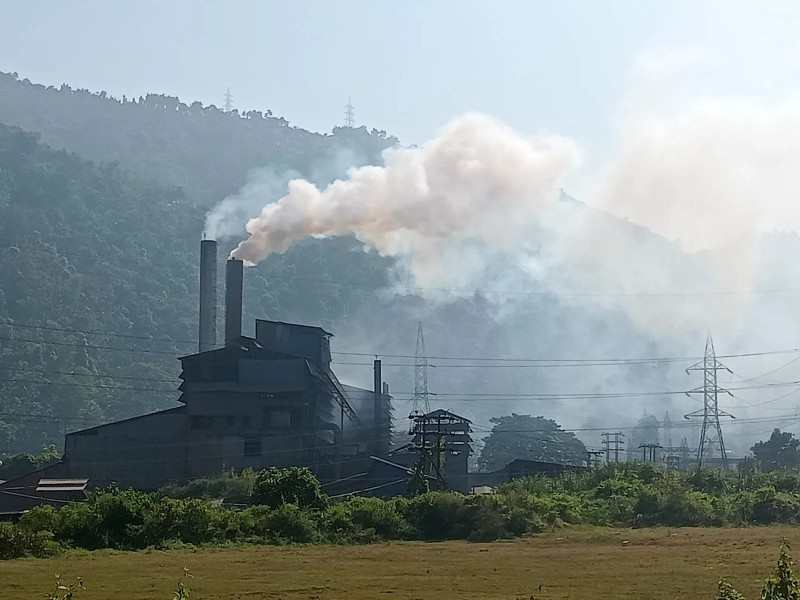
For quite some time now, everyone have been banging the drum about the worsening pollution in Byrnihat—a region once verdant and serene, now smothered in smog. Travelling through the patch along the Guwahati-Shillong road, one could quite literally choke on one’s own breath. It’s the sort of place where rolling down the window feels like inviting in a chimney. “So-called development” has turned a green haven into a grey nightmare, and residents are beginning to feel the heat—quite literally.
In response to mounting concerns, the Centre for Efficient Governance (CEG) has advised the governments of Assam and Meghalaya to adopt a Graded Response Action Plan (GRAP)—a tried and tested framework already showing results in Delhi-NCR.
Rakesh Hazarika, Executive Director of CEG, was blunt but clear: “The GRAP model implemented in Delhi-NCR has demonstrated clear effectiveness. Its structured, trigger-based actions—from curbing industrial emissions to vehicular restrictions—have brought a degree of accountability to air pollution governance.”
He added, “Such a system is critical for Byrnihat, where public health is already under considerable strain. We’re not just talking about a few coughs and sneezes—this is fast becoming a chronic public health crisis.”
Legal Teeth and a Tailored Response
GRAP, let us not forget, owes much of its bite to the Supreme Court, which played a decisive role in shaping its legal framework. Following judicial intervention, GRAP was approved in 2016 and enforced the following year under the Commission for Air Quality Management (CAQM). The CAQM now holds legal powers over Delhi, Haryana, Uttar Pradesh, Punjab, and Rajasthan, enabling it to impose emergency measures on industries, restrict vehicular movement, and implement construction bans when necessary.
Hazarika believes a similar setup is long overdue for the Northeast. “There is no clear accountability framework overseeing the bordering area of Dimoria-Byrnihat. A legally mandated body, reporting directly to the Guwahati High Court, with enforcement power is the only way to ensure compliance and transparency,” he said.
Frankly, it’s high time the powers that be stopped pussyfooting around and gave Byrnihat the legal infrastructure it desperately needs.
Mind the Data Gap
Another thorny issue raised by CEG is the woeful lack of proper air quality monitoring infrastructure. At present, the only Continuous Ambient Air Quality Monitoring System (CAAQMS) in the entire Dimoria-Byrnihat belt is located at Byrnihat itself, operated by the Pollution Control Board, Assam. That’s hardly sufficient when dealing with a crisis of this scale.

CEG has urged the immediate installation of new monitoring stations in high-risk areas such as Khetri, Sonapur, and the wider Dimoria belt. Real-time data under the National Air Quality Index (NAQI) is vital if authorities are to understand pollution patterns and respond promptly.
All Talk and No Teeth?
While recent administrative steps—including industry inspections and proposed corrective actions—are a step in the right direction, CEG was quick to point out the obvious: without statutory backing, such actions may amount to little more than window dressing. In other words, what’s the point of issuing warnings if there’s no stick to follow the carrot?
As things stand, the people of Byrnihat are left breathing through a haze, watching the environment deteriorate with little to no institutional relief. If the authorities continue to twiddle their thumbs, we may soon find ourselves past the point of no return.
In the end, a stitch in time saves nine. The need of the hour is a comprehensive, legally empowered response to Byrnihat’s pollution woes—before the region’s air becomes a permanent health hazard, and its greenery a mere memory.
What's Your Reaction?

A devoted foodie with keen interest in wild life, music, cinema and travel Somashis has evolved over time . Being an enthusiastic reader he has recently started making occasional contribution to write-ups.