
Vinod Kumar Shukla Poems: A Glimpse into “Atirikt Nahin”

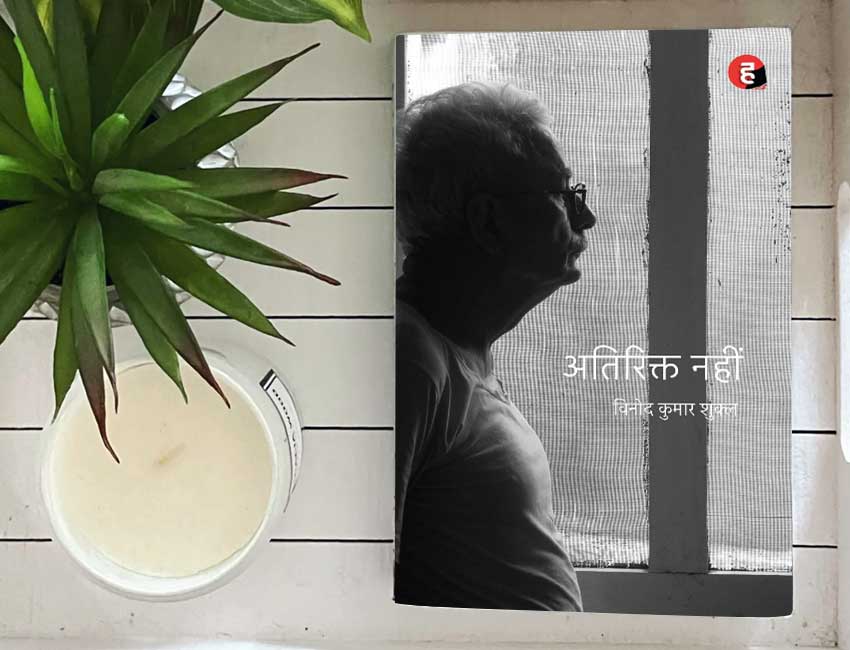

Discover the profound simplicity of Vinod Kumar Shukla poems through this insightful introduction and selection, masterfully translated by Navamalati Neog Chakraborty. Delve into the words of the recently crowned Jnanpith awardee, whose unique voice captures life’s everyday dilemmas with striking clarity.
The poet Vinod Kumar Shukla is that piece of charcoal we term as a diamond, that has under stress shone with the beauty of his pen. He who hailed from Chhattisgarh and had in all his simple-minded frank avowal stated that… ‘kabita likhna bhatakna ki tarah hae…kabita likhne ki maine koushish ki aur abhi bhi koushish kar kabita likhta hoon.’ He has at the age of 88 won the Jnanpith Award to the great delight of his readers, this year. Vinod Kumar Shukla is indeed a great poet with a difference.
Through his poems, Shuklaji breathed in the dilemmas of life in simple every day words, lending a sharp edge to his voice. His words strike a deep chord within his being and his poems beautifully highlight mere everyday home truths. There is no bid to create allure, no passing judgements or clothe his poems in gaudy raiment. It is his stark lines that lend a compulsion to his voice to stand by the world. He passes no judgement through his critical understanding of his world, but make his readers chew that vision which they had missed. Readers find the deep-seeing viewpoint of his poems act as pointers. It is the life, the ways, the everyday struggles, the smell, the sights, the riots, the indifference, the hiatus, poverty and squabbles…that form the bedrock of his reality. It echoes in the silence between the lines of his poems.
The tranquil note of his poems half tempts the readers to just read on, but very soon they pause. They take note of men’s capitulation in the vagueness of even that that is most ordinary. His poems aren’t really about living in dark times like Bertolt Brecht, and yet a lamp wouldn’t light up our world from that awesome darkness of thoughts. The realisation sinks in and submerges to the feel that life is essentially a rough bid to struggle on, with a whole lot to think about. Shuklaji’s poems are the framed versions of it.
‘Atirikt Nahin’ is a warm collection of poems published in the year 2023 where the poet’s rationale leaves the readers in deep thought. One may not detach the past or the present after seeing reason in all its vividness drawn out in a few words.
The Jnanpith winner, Shuklaji, keeps the dynamics of Indian poetry locked in its charming perplexity, moored or unmoored, as he played with words to reach a deeper depth of meaning. Even within the Indian scenario, the poems reinvent themselves as life provides no infinite reaches of heaven. The poet winces, sees, feels and understands the depth of a whole lot of angles in a precise and emphatic understanding. Reality thus merges with the abstract, caged in a reflection of truthfulness.
……………………………………………………………
(1)
A Man Had Given Up In Despair
I do not know who he was
But he had given up in despair
I knew despair though
I therefore approached him
And stretched out my hand
He held my hand and stood up
Though he didn’t know me
Yet he understood my gesture
The two of us walked together
Though we knew not each other
Yet we knew to keep company.
(2)
Aloft a Huge Rock
Aloft a huge rock
Another rock was placed
It seemed as though it would fall down
This feel is ancient
It is eternal
The fear of a future
But that which was supposed
To happen at any moment
Never did happen
And the road below these rocks winds out
A shepherd came and stood there
He came and stood just below the shadow.
(3)
Gods are Now too Many
Gods are now too many
Everywhere they are too many
Both form and formless
Every man holds on to too many of them
Even after sharing them
There are yet too many left
In the faith of different men
Too many different gods are yet left
Within this excess
I pick up my empty bag
To empty it further
And shake it out with fear
To find the formless fall off.
(4)
In my Loneliness Alone
My solitude lies in my seclusion
Its remembrance is a clamour
I do regard my neighbour’s presence
And I close my windows
And I close the door
No noise from the outer world
Reaches me.
Its very recall make me wince
For I hear the flutter
Of a butterfly’s wings.
On opening the window
To find a way for the butterfly
To fly away to the garden
I notice
That through my door
The corridor to the bedroom
Was the very pathway
To reach the garden.
(5)
Perhaps
Perhaps
That may be my last bid to escape
After the awesome crowd departs
Perhaps a blessed privacy
After I’d lost in a riot
An entire family
Brother, sister, wife, children
And my old parents
All wiped off.
In one or two other homestead
There may be left alive
A few children, some puppies
A black hen or a pet parrot
Or may not be
There may be someone numbed
Though alive
Or they may not be
Perhaps alive
Perhaps …
(6)
There was a Window Living on the Wall
There was a window living on the wall
And a scenery lived through the window
A cottage, a trailing path, a river
And a pond or two
And a sky was above for all
Once in a while people passed by
And there were birds and trees
All existed through the window
But what was not there was an open window
And what was there was an open window
A little removed from the window
There lived a man on the wall.
(7)
The Person was a Singular Being
The person was a singular being
His personality had its hands-feet nose-mien
It grew on to develop
And it grew thus that
It was all lost amidst his wide girth
Save for his two hands
To aid him in beating his drum.
I never shook hands with this man
Never have I met with his personality.
…………………………………………………………………………………………………………………………………
What's Your Reaction?
