
The Big One : The Catastrophic Earthquake That’s Coming

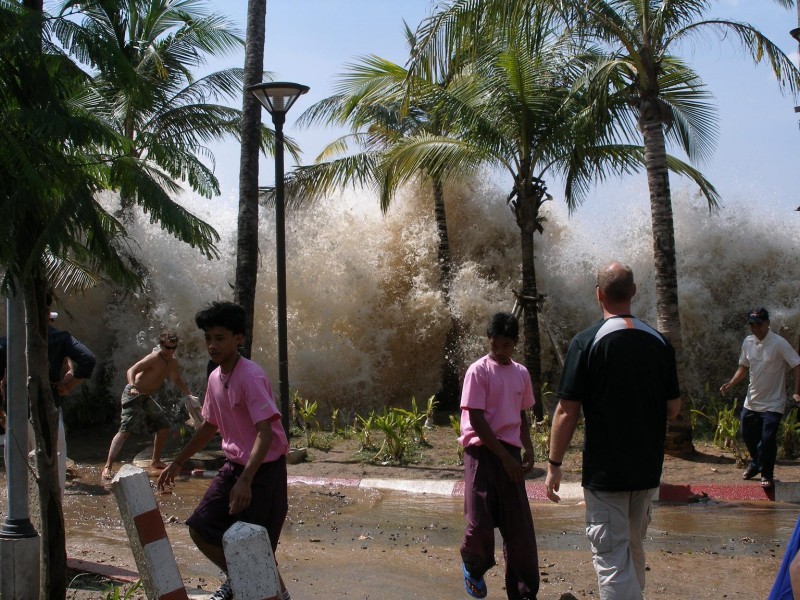

A new study warns that The Big One—a major earthquake along the Cascadia Subduction Zone—could trigger sudden land subsidence, severe flooding, and long-lasting devastation across the Pacific north-west, from northern California to Washington.
By all accounts, the Pacific north-west of the United States is a sitting duck, perched precariously on the edge of catastrophe. A recent study published in the Proceedings of the National Academy of Sciences has sounded the klaxon, warning that a major earthquake—referred to ominously as “the Big One”—could bring the house down from northern California to Washington, both figuratively and quite literally.
Stretching from Canada to California, the Cascadia Subduction Zone has long been a powder keg, and scientists now say there’s a 15% chance of ‘The Big One” earthquake will be greater than magnitude 8.0 in the next fifty years. Should this sleeping giant stir, it could trigger a massive tsunami and cause parts of the coastline to sink more than six feet in the blink of an eye. Not to put too fine a point on it, but we’re talking about entire communities suddenly finding themselves well below sea level—more submerged than a teabag in a cuppa.
Tina Dura, lead author of the study and assistant professor at Virginia Tech, has highlighted that this sudden subsidence would dramatically expand the floodplain. “The expansion of the coastal floodplain following a Cascadia subduction zone earthquake has not been previously quantified,” she said, noting that it would pose serious challenges for land use and drastically lengthen the timeline for recovery. Translation? It’s not just a spanner in the works—it’s the whole toolbox.
And while sea levels caused by climate change are rising at a slow and steady pace, this geological upheaval would be like swapping a leaky tap for a burst water main. The effects would be felt for decades, if not centuries, leaving low-lying communities—especially in southern Washington, northern Oregon, and northern California—high and dry in the worst way imaginable.
Should such an event occur closer to the year 2100, as the study suggests is nearly 30% likely, the one-two punch of earthquake and climate-driven sea level rise could render parts of the coastline uninhabitable. That’s not just curtains for seaside picnics—it could be the end of the line for entire towns, livelihoods, and delicate ecosystems.
The last time the Cascadia fault let rip was in 1700, producing a sea level rise of more than six feet in mere minutes and hurling a tsunami across the Pacific that rattled the coast of Japan. Fast-forward to today, and the stakes are exponentially higher. A 9.0 magnitude quake could kill more than 30,000 people, wreck 170,000 buildings, and do a number on the economy to the tune of $81 billion. A 2022 study even warned of tsunamis taller than a 20-storey building—enough to leave even the most seasoned disaster planner clutching their clipboard in despair.

The study’s authors are sounding the alarm not to scaremonger, but to galvanise action. They hope their research will help policymakers and local communities plan ahead—because when the chips are down, preparation is the only ace up your sleeve.
“Preparing for these compound hazards can minimise long-term damage, ensure resilient communities, and protect critical coastal ecosystems from permanent degradation,” they wrote.
So what’s the takeaway here? For those living along the Cascadia coast, it’s not a matter of if the ground will move—but when. And when it does, you’d better hope your emergency kit isn’t collecting dust in the back of the cupboard.
What's Your Reaction?
