Beyond the Temple Walls: 7 Secrets of the Goddess Book Review

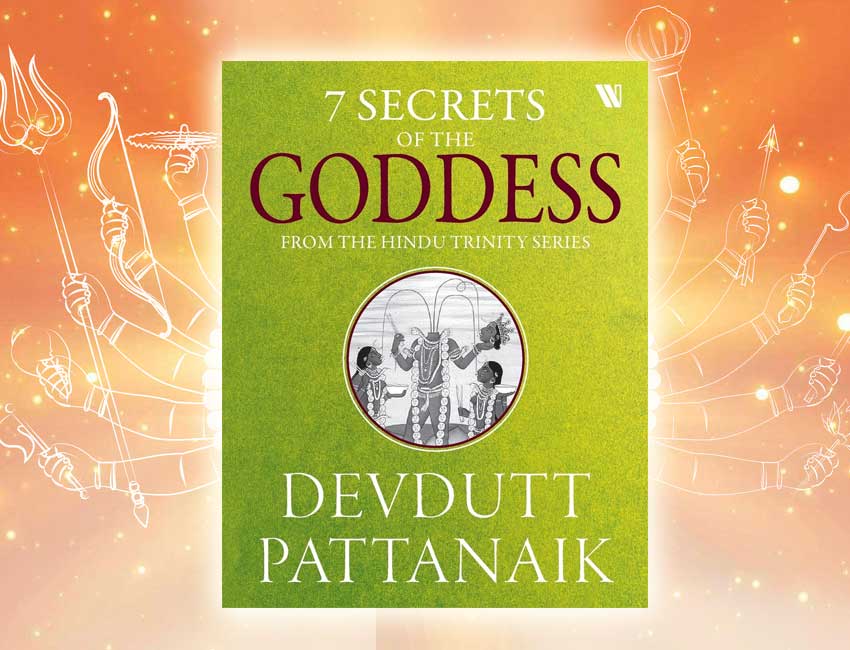

In this insightful review, Aarna dives into Devdutt Pattanaik’s 7 Secrets of the Goddess. Exploring the philosophical depths of the Divine Feminine, she beautifully connects ancient myths, Tantra, and Shakti with modern feminism, challenging how we view women today.
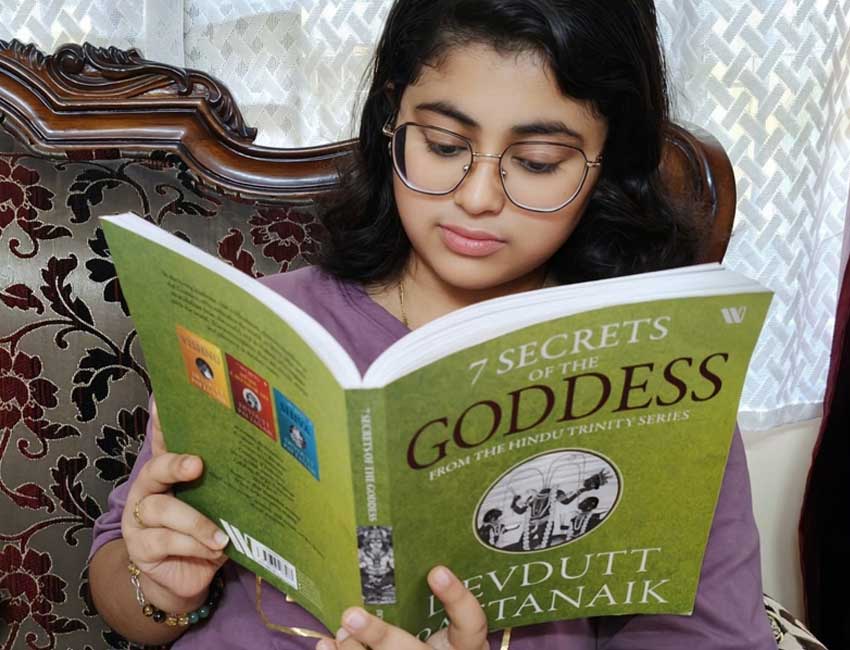
Growing up, I have always been a keen observer of Sanatan Dharma and have often found myself searching for the philosophy beneath its rituals and symbols. When my Sid Uncle gifted me the book “7 Secrets Of The Goddess” by Devdutt Pattanaik, I was beyond exhilarated. Devdutt Pattanaik’s name has long been synonymous with thoughtful retellings of mythology, and this book showed me exactly why.
As a feminist and someone irresistibly drawn to the Shakta traditions, I knew that this book wasn’t going to be another book of mythology for me. The first page already convinced me that this was a mirror that reflected not only the many forms of Devi, but also the uncomfortable paradoxes of the world we inhabit. As I continued flipping the pages, a realisation hit me.
It is quite ironic that we bow before Goddess Kali who is completely naked, with unbound hair and beyond the shackles of human ego, shame and social expectation. We celebrate her fury as divine. Yet when a woman embodies even a fraction of that fearlessness or when she refuses to shrink herself, speaks unapologetically or rejects the molds of societal expectations, she is labelled “arrogant”, “too bold”, “difficult”, or “characterless”. Somewhere between the temple and the street, our reverence for the feminine transforms into discomfort. That contradiction lingered with me throughout the book.
Devdutt Pattanaik beautifully reminded me of the true essence of Shakti. Lakshmi is far more than the goddess of wealth. She is Shri. She is the very Shakti of Vishnu, the principle that allows preservation itself to exist. Saraswati is not simply education, she represents the relentless pursuit of truth and how creation is hollow without it. Durga is not just a warrior but is the energy of Shiva’s consciousness. Without her, Shiva is Shav (a corpse). Similarly Radha, Yogmaya, Kamakhya, Chhinamasta, Tara and the many manifestations of Devi reveal that femininity has never been singular. It is fluid, sensual, contradictory, nurturing, destructive, patient, and revolutionary all at once. The line, “Yoga-nidra is reality but Yoga-maya is perceived reality filtered through the human mind. Eventually, the mind will discover that she does not need him but he surely needs her.” specifically bewitched me for it challenged my understanding of reality, reminding me that the Divine Feminine is not dependent on creation; rather, creation is dependent on Her.
One of the aspects I appreciated most was how the book weaves myths with philosophy. As I read the fascinating stories scattered throughout the chapters, I found myself constantly pausing, not because the language was difficult, but because each story carried layers of meaning that brought forward a new scope of understanding. The pictures helped me to strengthen my imagination.
The opening discussion comparing different civilizations was equally thought-provoking. It made me realise how every culture attempts to understand creation, power, and femininity through its own myths, and how those narratives continue to shape the societies we live in today. Yet the thought I returned to most while reading the book often had little to do with mythology itself. Every year, for nine sacred nights, people celebrate the Goddess. But once the lamps are extinguished, how often do they honour the same feminine spirit in the women around them? The mother whose sacrifices go unnoticed, the girl whose dreams are silently crushed, and the woman who dares to lead and refuses silence. People worship Devi with folded hands, yet quite often fail to respect her reflection walking beside them.
Perhaps my favourite aspect of the book was its exploration of Tantra. As someone who has always wanted to understand Devi Mahakali beyond her iconography, I found this perspective deeply enlightening.

Seven Secrets of the Goddess did not make me a feminist because I already was one. But it gave my feminism deeper roots. It reminded me that the fight for women’s dignity is not separate from our spiritual traditions; rather, those traditions, when understood in their true philosophical depth, have always recognised the feminine as Shakti—the force without which creation itself cannot exist.
In the end, as I flipped the last page, Devdutt Pattanaik’s 7 Secrets Of The Goddess, made me understand that the Goddess was never confined to mythology; it is our vision that has always been too small. For me, the Goddess is no longer someone I seek in temples—she is the supreme energy I now recognize in every fearless woman.
Book Details:
- Title: 7 Secrets of the Goddess
- Author: Devdutt Pattanaik
- Publisher: Westland
- Release Date: 28 September 2014
- Format: Paperback
- Pages: 270 pages
- Price: 354 INR
- Where to buy: https://devdutt.com/7-secrets-of-the-goddess/
What's Your Reaction?