
Bhoot Chaturdashi Special: The Mango Tree That Called

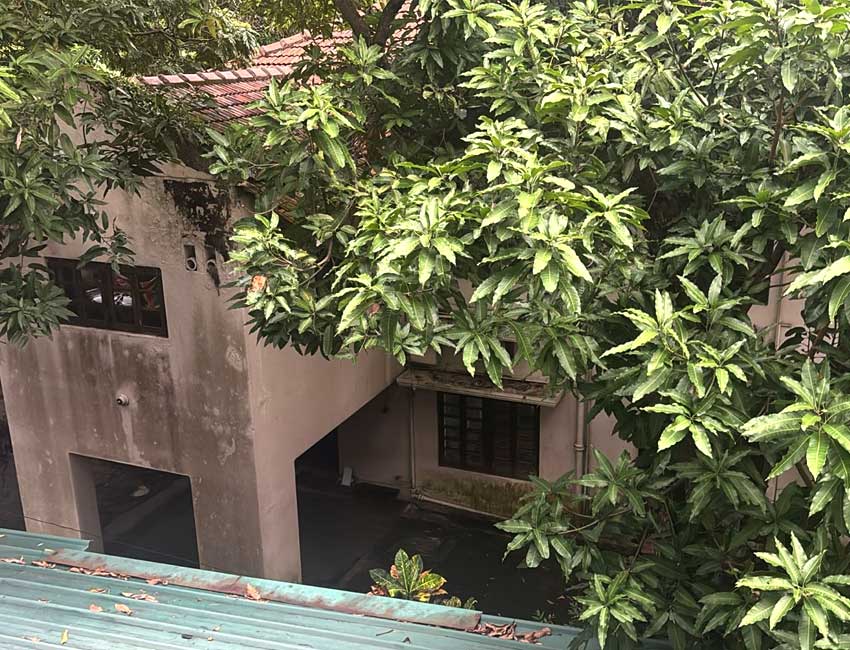

In a perfect Bhoot Chaturdashi, read Navanita Varadpande‘s ghost storyabout a Sri Lankan house, a mysterious mango tree, and a very close call.
Let’s face it, we Indians don’t need Halloween to celebrate ghosts and spirits. We already have an entire festival dedicated to them. The Indian version of Halloween, called Bhoot Chaturdashi, is here. It’s celebrated on the night before Diwali, that one evening when, according to Bengali folklore, the veil between the world of the living and the realm of the dead grows thin enough for the ancestors to drop in for a visit. Fourteen generations of them, in fact, the legendary ‘chowddo gooshti-r aatma’.
On this night, Bengalis light fourteen oil lamps, partly to guide their ancestors home, and partly to keep out any freeloading spirits that might wander in for some snacks. And since the season of ghosts and good intentions is upon us, and since I, for one, have no problem admitting that I believe in the paranormal (and in well-timed goosebumps), here’s my true story for Bhoot Chaturdashi.
They say houses breathe.
Some in shallow sighs, some in gasps, and some in whispers that slip through cracked walls and rusted latches. They inhale our laughter, grief, and rage and hold them in their bones long after we’ve gone. Every house, if you listen carefully, hums with what it has seen.
My husband never believed in such things. His world was made of numbers, meetings, and flight schedules, nothing beyond reason or routine. Until that day in Sri Lanka.
It was an afternoon heavy with the scent of rain. The light outside was syrupy and slow, the kind that blurs the edges of things. He was in Colombo, visiting a paper merchant, a cheerful man named Mark. The office was on the second floor of an old colonial building: whitewashed walls, green shutters, and floors that creaked as though they remembered footsteps that were no longer there.
As they spoke, my husband drifted toward the window. Below, a mango tree leaned against the boundary wall, its branches spilling into the courtyard like a generous guest. The tree was in full bloom, mangoes glowing like lanterns against a different shade of green.
But what caught his eye was not the tree.
It was the house behind it.
An antique house stood in the adjacent plot, beautiful in the way ruins sometimes are, windows dark and hollow like blind eyes, the roof sagging, the paint peeling like sunburnt skin. Yet there was a strange, stubborn grace about it, as if it had once been loved too deeply to die.
He said later that he had the distinct feeling the house was looking back at him.
“Beautiful, isn’t it?” Mark said, following his gaze.
“Whose house is that?” my husband asked.
“Was,” Mark corrected. “It belonged to a woman, the matriarch of an old family. She refused to sell even when everyone else did. After she died, it’s been empty. No one stays there long.”
My husband smiled faintly. “Empty? Houses don’t stay empty. They wait.”
Mark looked at him strangely, as though he’d said something that belonged to another world.
Something about that mango tree called out to him. Perhaps it was the play of sunlight trembling through the leaves, or perhaps the strange sense that someone, or something, wanted him to come closer.
At the far end of the office, half hidden behind a cabinet, was a small wooden door. He didn’t know why, but he felt an urge to open it, to step out, stand near the tree, and take a photograph for me because he knew my love for such visuals that seem a little off and at the same time so lovely.
He unlatched the door. The click rang sharp and final, like a nail driven into silence.
“Hey, what are you doing?” Mark’s voice cut through the air.
“Just a picture,” my husband said.
But before he could push the door open, Mark rushed forward and yanked him back with surprising strength. The door swung outward, and there was no ground beyond it.
Only air.
A sheer drop.
Two floors down, the courtyard glared white and sunlit, as though nothing dangerous could ever happen there.
For a long moment, neither of them spoke. My husband’s pulse thundered in his throat.
“If I’d taken one more step…” he murmured.
“You’d have fallen straight down,” Mark said, still gripping his arm. “That door was supposed to be locked. Didn’t I tell you? The house next door is cursed.”
My husband turned toward the mango tree again. The sun had shifted. The house, beyond the branches, seemed to tilt its face toward him, and for an instant, the shadow on its façade curved into something that looked like a grin.
Wicked. Knowing.
Later, Mark told him the story.

“The old woman was fierce,” he said. “Lived alone after her sons left. She said the house was her blood, that as long as she lived, no one would take it from her. After she died, people said they saw her shadow at the windows. Buyers came, but never stayed. Some heard footsteps. Some felt… watched. The house wants to be left alone. I wanted to buy the house too but something seemed to hinder any talks with brokers.”
Outside, the mango tree swayed though there was no wind, its branches brushing the old roof like a hand in secret conversation.
My husband stood still for a long time. Then, almost as if to prove he still belonged to the world of the living, he raised his phone and clicked a picture, not only of the tree, but of the house itself.
When he looked at the photograph later, he told me, the house seemed different. The windows glimmered faintly, and the light at one corner of the roof was shaped like a woman’s silhouette, watching.
That evening, when he called me, his voice was softer than usual.
“There’s something strange here,” he said. “The house, it felt alive.”
“Alive?” I teased. “You mean haunted?”
He paused. “Maybe. Or maybe houses just remember too much.”
I often think of that mango tree, still blooming over the cracked wall, still reaching for something it once knew. And I imagine the house behind it, listening, breathing, waiting.
Because houses do live on, long after we stop believing in them.
Some remember love.
And some, remember the fall that never happened.
Author’s Note
This story is based on a true incident. I have always believed that places absorb our energies, the joy, sorrow, and silence we leave behind. Some remember gently. Some, fiercely. And some, like that house in Sri Lanka, refuse to forget.
What's Your Reaction?
