
The Bacteria Story

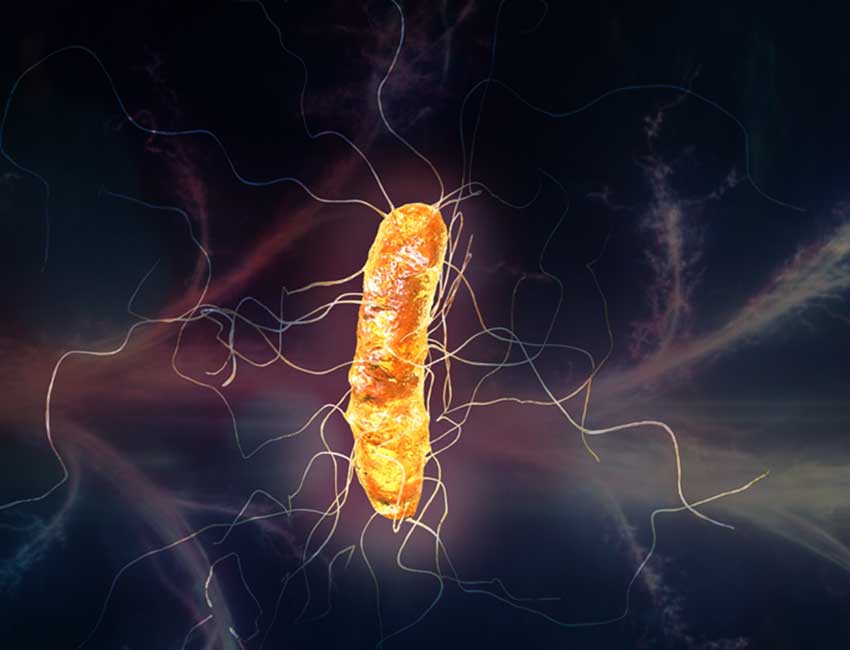

A witty deep dive into Davín et al.’s groundbreaking study that rewrites the timeline of aerobic bacteria and the Great Oxidation Event.
Let’s face it, when it comes to poking around the primordial soup of Earth’s distant past, we’re up against it. Fossils of the earliest living organisms are as rare as hen’s teeth, and pinning down exact dates for when they first appeared is rather like trying to nail jelly to a wall. But scientists, undeterred by such hurdles, are nothing if not resourceful. A recent study by Davín and colleagues has done a cracking job of piecing together the evolutionary jigsaw of early microbial life of bacteria — using a mix of molecular clocks, machine learning, and what can only be described as very clever biological sleuthing.
Now, before you doze off thinking this is just another dusty tale from the evolutionary archives, hold your horses. This study touches on one of the biggest game-changers in Earth’s history — the Great Oxidation Event (GOE), when the atmosphere went from being rather stuffy and oxygen-free to positively breathable (well, if you’re a bacterium, that is).
The Lay of the (Very Ancient) Land
The tale begins more than four billion years ago, shortly after the Earth had a run-in with a celestial body the size of Mars — a cosmic punch-up that not only sterilised the planet but also gave us the Moon. Jolly good trade-off, really. Fast-forward a smidge (say, 500 million years or so), and life was beginning to stir, possibly even thrive, albeit in microscopic form and without any fanfare.
But here’s the rub: fossils from this era are practically non-existent, which means we’re short on the usual evidence that helps date who came first, second, or somewhere in between. That’s where Davín et al. come in, taking a different tack. Rather than squinting at rocks, they looked at the genes, the genomes, and the long trails of evolutionary breadcrumbs left behind.
Using a Bayesian framework (think of it as educated guesswork on steroids), they analysed the transitions from anaerobic to aerobic metabolism — essentially, from bacteria that didn’t give two hoots about oxygen to those that could actually make use of the stuff. The key assumption? If a bacterial group needed oxygen to get by, it probably didn’t show up before oxygen itself was knocking about in the atmosphere.
Not Quite What It Says on the Tin
Surprisingly, some bacteria were already dabbling with oxygen long before the big atmospheric reveal. At least three lineages were found to have made the switch from anaerobic to aerobic lifestyles before the GOE — which means they were, if you’ll pardon the expression, ahead of the bloody curve. That’s a bit like discovering someone had invented the electric kettle during the Iron Age — not entirely expected.
This flips the script a bit. Previously, the story went: cyanobacteria evolved oxygenic photosynthesis, began belching out O₂, and the rest of the biosphere slowly adapted. But now, it looks like a few bacterial pioneers might have developed oxygen tolerance first — and that this very knack may have paved the way for the evolution of oxygen-producing photosynthesis. Talk about putting the cart before the horse.
A Timeline Worth Its Salt
The team’s molecular clock suggests that the last common ancestor of bacteria likely crawled onto the scene somewhere between 4.4 and 3.9 billion years ago — practically fresh off the back of Earth’s formation. Major bacterial groups (phyla, if you’re being fancy) began to branch off during the Archaean and Proterozoic eras, around 2.5 to 1.8 billion years ago. And would you believe it — many bacterial families are as old as land plants and animals. Yes, these humble microbes were holding down the evolutionary fort long before anything with legs or leaves turned up.

Wrapping It Up — No Strings Attached
The big takeaway? Aerobic bacteria — the ones that need oxygen to survive — were already lurking in the shadows before the GOE ever got underway. And once the oxygen levels rose, these bacteria didn’t just survive — they flourished, diversifying faster than their anaerobic cousins. It’s the biological equivalent of switching on a light and suddenly everyone wants a piece of the pie.
Davín and colleagues have managed to piece together a timeline of bacterial evolution that links molecular genetics to Earth’s geochemical shifts. It’s an impressive bit of detective work and a welcome reminder that, even when the fossil cupboard is bare, the story of life is still there for the telling — if you know where to look.
As the saying goes, where there’s muck, there’s brass — and in this case, the muck is ancient bacterial genomes and the brass is a clearer view of how life on Earth came to be.
Sources : Science.org