
Tourism Gets A New Face Powered by Women

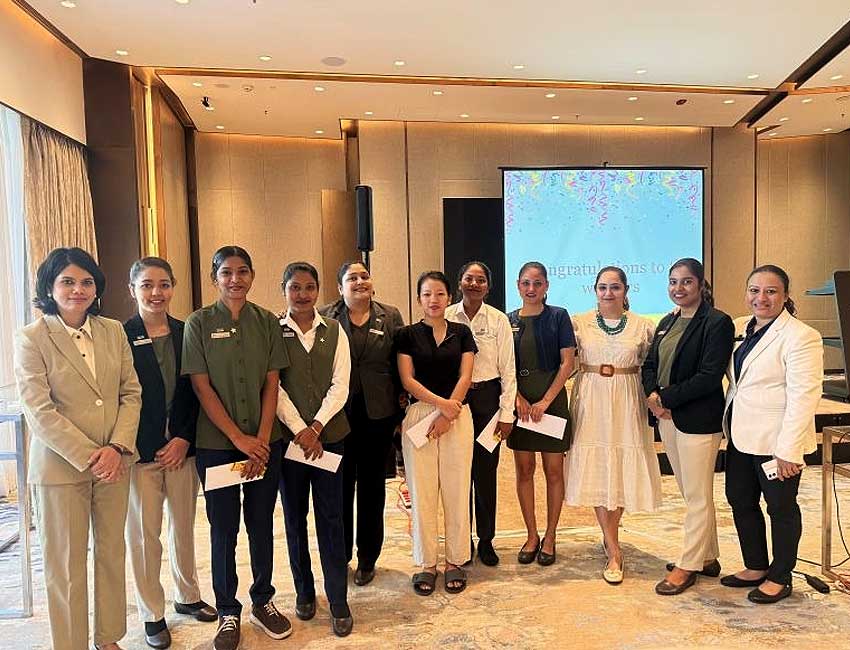

An adaption of an article by Sarah Johnson at The Guardian. From Sri Lanka’s all-female hotel Amba Yaalu to Tanzania’s pioneering Dunia Camp, this piece highlights how women are reshaping tourism.
In the world of tourism, a fair few women have had to swim against the tide. For Jeewanthi Adhikari, it took a decade of grit, grace, and grim determination to finally land the promotion she deserved. For years, she’d watched men with thinner CVs climb the corporate ladder while she remained on the lower rungs. Every interview felt like a subtle inquisition—not about her skills, mind you, but about whether she planned to marry or have children, and the assumed domestic derailments that might follow.
“I felt I had to prove myself ten times over,” Adhikari, now 42, admits. But fortune finally smiled when she was appointed manager of Amba Yaalu, Sri Lanka’s first—and only—hotel run entirely by women. Opened in January, the hotel stands tall not just as a sanctuary for guests but as a symbol of transformation in a country where women make up less than 10% of the tourism workforce.
To put that into perspective, globally, women represent 54% of the tourism workforce. Yet, only 14% progress into leadership roles, according to Natalia Bayona, executive director of UN Tourism. “The good thing about Covid,” Bayona says, “was that it opened a window for developing opportunities that weren’t there before for women, particularly in rural areas.” In other words, it gave a sector in dire need of reform a bit of a kick up the backside.
At Amba Yaalu, nestled amid mango trees by the Kandalama Reservoir, women are now calling the shots—from the front desk to the kitchens. It’s the latest feather in the cap of Chandra Wickramasinghe, founder of the Thema collection of hotels. Inspired by his mother, who raised eight children on her own while working as a nurse, Wickramasinghe is a man on a mission. “This is crazy,” he says bluntly. “We’ve got thousands of women leaving for the Gulf to work as domestic help, often treated appallingly. Why shouldn’t they have opportunities here?”
He’s not alone in this thinking. Across the Palk Strait, the all-female-run Westin Hyderabad Hitec City, opened in June 2023 by Marriott International, champions the same cause. “We wanted to push the envelope on diversity,” says Khushnooma Kapadia, vice president of marketing for South Asia. Sous chef Amrita Biswas, once the only woman in testosterone-heavy kitchens, now finds herself part of a changing culinary narrative. “We’ve gone from making rotis at home to running restaurants,” she says with quiet pride.
Africa, too, is rewriting the rulebook. In Tanzania’s Serengeti, Dunia Camp—the first entirely female-run safari camp on the continent—is leading not only in guest satisfaction but in shattering stereotypes. When camp manager Petronila Mosha started, there were barely two or three women in the entire safari operation. Today, nearly 30% of the workforce is female. “At first,” she recalls, “some of the women got spooked by lion roars and ran home. But we’ve stuck it out. Now, female guides are like hotcakes—every company wants them.”
Of course, it’s not all plain sailing. From heaving gas canisters to deciphering safety labels with limited literacy, the women at Amba Yaalu have faced challenges that would make most blokes think twice. Executive chef Kaushalya Batagoda, one of the few women to helm a professional kitchen in Sri Lanka, is determined to change that. Raised in the local area, she’s working to pull more women from rural communities into the fold—even those who’ve never stepped foot in a hotel.
Wickramasinghe is in no doubt about their potential. “They’re brave, capable women. They’ve had to be,” he says. “And you see it in how they carry themselves—especially at night. Confidence has replaced caution.”
But old prejudices die hard. Both in Sri Lanka and Tanzania, the women have had to fend off mutterings about whether they’re stepping out of line. There are fears—often whispered—that exposure to Western guests might corrupt local values, spark rebellion, or even lead to that most dreadful of sins: women drinking or smoking.
Yet the tide is turning. As travellers increasingly seek authenticity, humanity, and purpose in their experiences, ventures like Amba Yaalu and Dunia Camp are not just ticking boxes for gender equality—they’re delivering service that’s second to none.

“The future is female,” Mosha says matter-of-factly. “And in this line of work, it’s about time.”
So, while some may still raise an eyebrow at a woman running the show, these trailblazers are too busy setting the standard to care. After all, it’s not just about having a seat at the table anymore. It’s about flipping the whole table over and building a new one—on their own terms.
An adoption of an article Sarah Johnson at The Guardian.
Cover image is of The Westin Hyderabad Hitec City.
What's Your Reaction?
