
Sikkim: A Botanical Marvel Rediscovered



Joseph Dalton Hooker’s 19th-century revelation about Sikkim ’s unparalleled plant diversity has been validated by a recent study mapping the Indian Himalayan Region.
What a British explorer said as far back as the 1850s has come out to be true last week: Sikkim has a plant diversity that cannot be matched by the entire lot of European countries.
Joseph Dalton Hooker, the British botanist, who stood as tall in the subject as Charles Darwin was in the animal world, had found this when he toured Sikkim in 1849-51 and was dumbstruck by Sikkim’s floral diversity, and now a duo of an old and a young man, one from Sikkim and the other “with” Sikkim are planning to do a massive documentary on the people who are the custodians of this diversity, the Lepchas.
Hooker’s reference to Sikkim as the wonder of floral diversity, has been proved right in a study conducted by a research team to map the Indian Himalayan Region (IHR) for floral diversity. The study was led by Dr Anzar A Khuroo, Associate Professor at the University of Kashmir’s Centre for Biodiversity & Taxonomy. The report stated that Sikkim has the highest number and density of plant species, standing at 5090, whereas the next nearest was Arunachal Pradesh (4907 and next comes Uttarakhand at 4352.
Sikkim also has the highest density of plant species, at 0.717 per square kilometre, and what most people are unaware of is that a large number of these, close to a thousand, are medicinal plants and herbs, documenting of which is the quest of the duo working on that documentary.
Interestingly, it is not known how far the study by Kashmir University is correct on one aspect. That is because their report says Sikkim has only 44 ndemic species, and Arunachal more than 300, whilst the people who have entered very deep into Sikkim – as Dalton had done — say that there are hundreds of endemic species in Sikkim, especially medicinal plants and herbs.
Interestingly again, there are reports that Assam has been marked as a “Global Priority” and has been found as one of the 33 “dark spots”, which are extremely rich in floral diversity, in a large study covering the entire world by the Royal Botanic Kew Garden, England. At one time, Dalton had been the Director of that garden and had planted the first rhododendron trees with seeds “squirreled away” by him from North Sikkim. From the botanic garden, gradually the majestic Sikkim rhododendron had spread to all of Europe.
Sikkim has any number of Scared Groves, which Meghalaya is famous for. And yet, the tragedy of Sikkim is that these have never been marked as sacred groves. Sacred Groves are considered to be sanctuaries of ancient angiosperms and the cradle of flowering plants and are protected by spiritual and religious dicta.
Just take the massive Mount Tendong, one of the highest religious places for the Lepcha community, and that is because the Lepchas, with their thousands of years of traditional medicinal knowledge, knew that this mountain, in South Sikkim, is just that, a Sacred Grove.
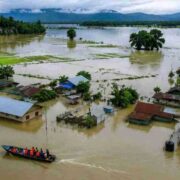
As said earlier, these Sacred Groves of Sikkim have been protected by religious dicta. Mount Tendong, for instance, has a story behind. When the Lepchas started leading negative lives against the wishes of their creator, Roam, he punished them and the Teesta River started flowing backward and was drowning the Lepcha lands. Then the Lepchas asked for forgiveness, so Mount Tendong raised its head from under the deluge and took away the Lepchas to safety. Hence, it had been declared holy by the ancient Lepcha patriarchs to save its huge diversity of endems and plants.
Similarly, the first ever agreement between the Bhutia and Lepcha communities to swear themselves In eternal bonding was concluded in another Sacred Grove, at the hillock now known as Ka’Vi Lungtsok. And thus no one messes about there and this is the site of a major annual puja. And there are umpteen numbers of such sacred groves in Sikkim.
However, Sikkim’s total floral diversity is yet to be mapped, and the team attempting the AV documentation fears that unless this is done, Sikkim stands a great threat of biodiversity piracy.
What's Your Reaction?
