
Kaziranga Chaos: The Eco-Sensitive Zone That Wasn’t

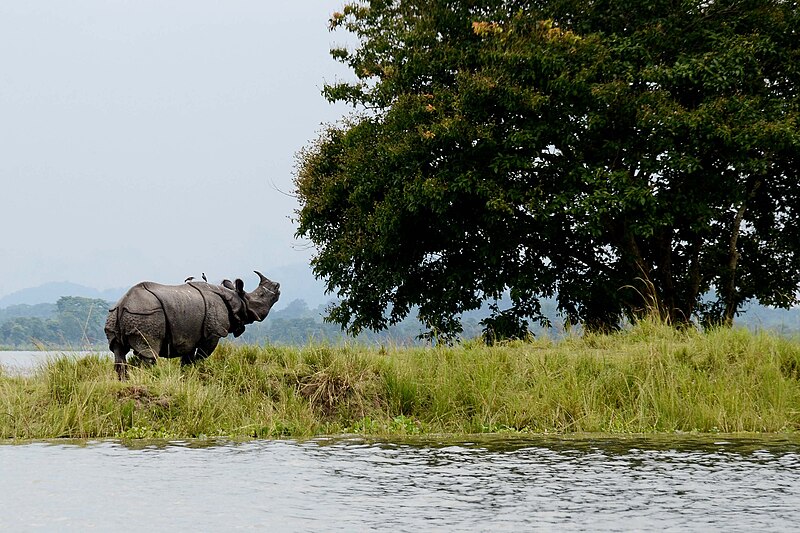

The Assam government’s withdrawal of a proposed 3,600 sq km integrated eco-sensitive zone (ESZ) around Kaziranga National Park has sparked widespread criticism from conservationists. This article explores the ecological, political, and socio-economic implications of the decision.
Well, it appears the Assam government has done a bit of a U-turn so sharp it could give a Formula 1 driver whiplash. The ambitious plan to create an integrated eco-sensitive zone (ESZ) covering Kaziranga National Park and seven other protected areas has now been quietly carted off to the nearest bureaucratic bin, leaving conservationists aghast and rhinos probably wondering what on earth’s going on.
The original idea – floated back in May last year – sounded rather splendid on paper. A 3,600 sq km ecological buffer zone wrapping around Kaziranga and extending to areas like Laokhowa, Burachapori, Nambor-Doigrung, Garampani and the proposed North Karbi Anglong Wildlife Sanctuary. The aim? To protect one of the world’s most biodiverse regions from the ever-expanding sprawl of human activity. In theory, it was all very David Attenborough. In practice, it’s all gone a bit Yes Minister.
In a letter sent to the Union Forest Secretary, Assam’s Chief Secretary stated that the integrated ESZ would directly affect nearly five lakh people across 340 villages in five districts. That includes Scheduled Tribes, Scheduled Castes, and economically vulnerable communities. Many of the KNP additions, the letter noted, are still stuck in the “proposed” phase with boundaries that haven’t budged since 1985 – which, in bureaucratic terms, is practically the Jurassic era.
So, what’s the plan now? Rather than one grand ecological cushion, the state says it will submit separate ESZ proposals for each area – sort of like swapping a proper thali for a plate of side dishes with no main course in sight.
Environmentalists, unsurprisingly, are not amused. They see this as a sop to vested interests and a massive step backwards for conservation. “Is this to protect wildlife or to accommodate resorts?” they’re asking, presumably while furiously polishing their binoculars. They warn that such a piecemeal approach weakens the ecological fabric of the region, risking irreversible damage to Kaziranga and beyond.
There are darker murmurs too. The Ninth Addition to Kaziranga, a 25.70 sq km area that includes rhino habitat, may now be dropped entirely after the local DC reported the presence of households. Rather than negotiate rights or consider relocation, the government appears to be leaning towards de-notification – a bit like throwing the baby out with the biodiversity.
And the Tenth Addition? Just 4.52 sq km, handed over to KNP authorities in 2021 due to its “high biodiversity value” and blissfully devoid of settlements – yet even that is being eyed for a downgrade to reserved forest. One might wonder what’s being preserved in a “reserved forest” if not the actual forest.
Oh, and if you thought things couldn’t get murkier, there are reports that fishing permits are being handed out in the Sixth Addition Area – a hotspot for illegal entry and, potentially, poaching. Permits in such a sensitive zone? That’s not so much conservation as a conservation-themed farce.
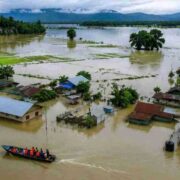
The state, of course, argues it’s all very sensible and people-centric – that development, displacement, and legal ambiguity must be sorted before anything else. Fair enough. But the question remains: why float such a sweeping proposal in the first place if the groundwork was never in place?
The irony is hard to miss. A proposal meant to integrate and protect has now been splintered and shelved. And the creatures it was meant to safeguard – rhinos, elephants, wild buffaloes, and more – are now left to navigate an increasingly fragmented landscape, while policymakers juggle priorities like a clown with too many coconuts.
So here we are. A missed opportunity. A shrinking habitat. And a government that seems more inclined to tiptoe around land disputes than take a bold stance on conservation. In the wild, indecision gets you eaten. Let’s hope it doesn’t do the same to Kaziranga.
What's Your Reaction?
