
Pankaj Mullick: The Maestro Who Made India Sing


 +1
+1 Pankaj Mullick: The Maestro Who Made India Sing

Pankaj Mullick: The Maestro Who Made India Sing

Pankaj Mullick: The Maestro Who Made India Sing

Pankaj Mullick: The Maestro Who Made India Sing


Rajib Gupta, Pankaj Mullick’s grandson, pays tribute to the legendary maestro. Discover how the “first man of Rabindrasangeet” shaped Indian music, from pioneering playback singing to his timeless Mahalaya compositions.
Some artistes leave behind tunes. Others leave behind traditions. But a rare few—like Pankaj Kumar Mullick—become traditions themselves.
For me, as his grandson and as a researcher of Indian cultural heritage, Pankaj Mullick is not just a name in music history. He’s that voice floating out of the radio on Mahalaya dawn, when the world is still dark and Bengal wakes up to the promise of Durga Puja. He’s the visionary teacher who, through Sangeet Shikshar Ashar, taught music to thousands without ever stepping into their homes. He’s the man whose humility was as legendary as his genius.
Born on 10 May 1905 and passing away on 19 February 1978, Mullick’s life wasn’t just about songs—it was about shaping how an entire generation experienced music. And nearly half a century after his passing, he still feels alive in the rhythm of our festivals, our films, and our nation’s musical landscape.
A Boy Who Sang in Secret
Mullick’s tryst with music began in the most innocent of ways—by singing at home. In the early 1900s, “respectable” families in Bengal frowned upon people singing publicly. Little Pankaj, with his natural talent, often had to hide it. His mother and aunts became his first audience.
Fate, however, had bigger plans. During a Rathyatra festival at his home, the renowned singer Durgadas Bandopadhyay happened to hear him sing. Impressed, he offered to train the boy. That moment changed everything.
Later, Dinendranath Tagore—Rabindranath’s grandnephew—took him under his wing. From him, Mullick learnt the delicate art of interpreting Tagore’s music. His renditions were so soulful that he was eventually hailed as “The First Man of Rabindrasangeet.” Imagine the responsibility of being the first person to carry Tagore’s songs to the masses—it was no small feat, yet Mullick wore the honour with quiet dignity.
The Radio That Carried His Voice
When All India Radio (AIR) was established in Calcutta in 1927, Pankaj Mullick was there almost from the beginning. And for the following fifty years, the radio would broadcast his voice into countless households.
But his contribution went far beyond just singing. He began composing for Mahishasuramardini in 1931, a mesmerising oratorio that blended hymns, narration, songs and music. Even now, on Mahalaya dawn, when that familiar opening choral chant cuts through the silence, it feels timeless. Generations have grown up hearing it, and it still continues to enthral everyone. That’s not just music—it’s heritage.

He also conceived and conceptualised Sangeet Shikshar Ashar, a live music class on radio that lasted 47 years! Think about it: an entire classroom without walls, where countless students learnt the basics of singing simply by tuning in. It’s like having today’s online classes in the 1930s.

Lighting Up the Silver Screen
The 1930s were a turning point in Indian cinema—silent films were giving way to talkies, and music was becoming the soul of storytelling. Mullick walked right into this new world and left an indelible mark.
For nearly four decades, he worked on around 150 films across languages—Bengali, Hindi, Urdu, and a few other Indian languages. But it was his long association with New Theatres Studio that stands out. Imagine the talent under that roof: K. L. Saigal, Kanan Devi, S. D. Burman, and so many other luminaries. Mullick was at the heart of that golden age, not just composing but also innovating.
He was the first to bring Rabindrasangeet into cinema, bridging Tagore’s poetry with popular culture. He pioneered the use of background interludes and interlinking music in film songs—something so common today that we forget someone had to invent it. And with director Nitin Bose, he introduced playback singing, a practice that revolutionised Indian cinema forever.
He didn’t just keep pace with the times—he defined them.
More Than Just a Composer
Mullick wasn’t the kind of artist who stayed confined to one role. He recorded his first song at eighteen and went on to compose over 5,000 songs in his lifetime. He shaped Bangla Adhunik Gaan—the modern Bengali song—and enriched Hindi and Urdu non-film music with equal flair.
And he wasn’t afraid to experiment. He introduced elements of Western harmony and instrumentation into Indian music, but never at the cost of its soul. That’s what made him special—his innovations always felt organic, never forced.
From 1953 to 1968, he also served as the honorary advisor to the Folk Entertainment Section of the Government of West Bengal. Under his stewardship, Lok Ranjan Sakha flourished. It’s rare to find an artist equally comfortable on stage, in the studio, and in government offices—but Mullick managed it all with effortless grace.
The Honours That Followed
Naturally, such a towering career brought recognition. Mullick received the President’s Medal for Best Music Direction – the equivalent of today’s National Awards on five occasions. He received multiple Bengal Film Journalists’ Association awards, and lifetime achievement honours from both AIR and HMV (now Saregama).
Titles flowed his way: Surosagar in 1931, Sangeet Ratnakar in 1962, the Padmashree in 1970. And in 1972, he became the first music director to be awarded the Dadasaheb Phalke Puraskar, the highest honour in Indian cinema. A year before his death, he was named Rabindra Tattacharya—a fitting tribute to his lifelong bond with Tagore’s music.
When the Nation Called
Some of Mullick’s most memorable contributions came not from films or albums but from moments of national significance. Rabindranath Tagore fondly permitted him to set his poems to music—the most famous being Diner Sheshe Ghumer Deshe from Tagore’s poem Shesh Kheya. It was used in the 1937 film Mukti.

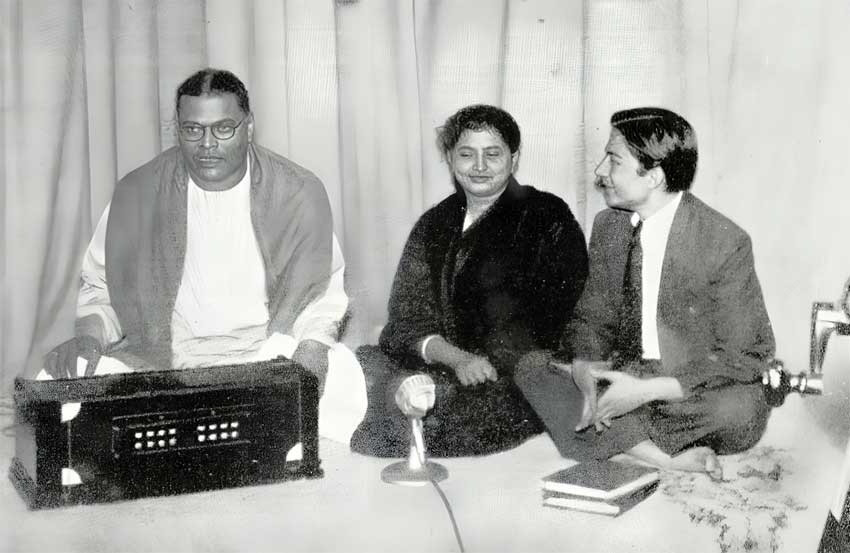
When Doordarshan went live in 1959, it was Mullick’s song that opened the broadcast. At Sarat Bose’s request, he recorded his version of Kadam Kadam Barhaye Jaa, with Netaji’s family members joining him in chorus. Prime Minister Nehru himself was present along with Shah Nawaz Khan during the recording. And perhaps most importantly, Jawaharlal Nehru asked him to record Jana Gana Mana in a rendition that would set the parameters for singing the National Anthem.


That’s the kind of respect and trust he commanded—not just from fellow artistes but from the nation itself.
Panjak Mullick: The Man Behind the Music
For all his brilliance, what people remember most about Pankaj Mullick is his humility. He worked with giants of his era, yet he never overshadowed them. Instead, he lifted others, shared credit generously, and remained approachable till the very end.
His story reminds us that greatness is not only about talent or innovation but also about character. And perhaps that’s why his legacy feels so warm, so human.
Panjak Mullick: A Legacy That Refuses to Fade
Mullick left this world in 1978. Yet, his presence is felt even today. Ritchie Road has been renamed Pankaj Mullick Sarani. His home on Sebak Baidya Street has been declared a Heritage Site. A statue of him stands tall in Maddox Square Park.
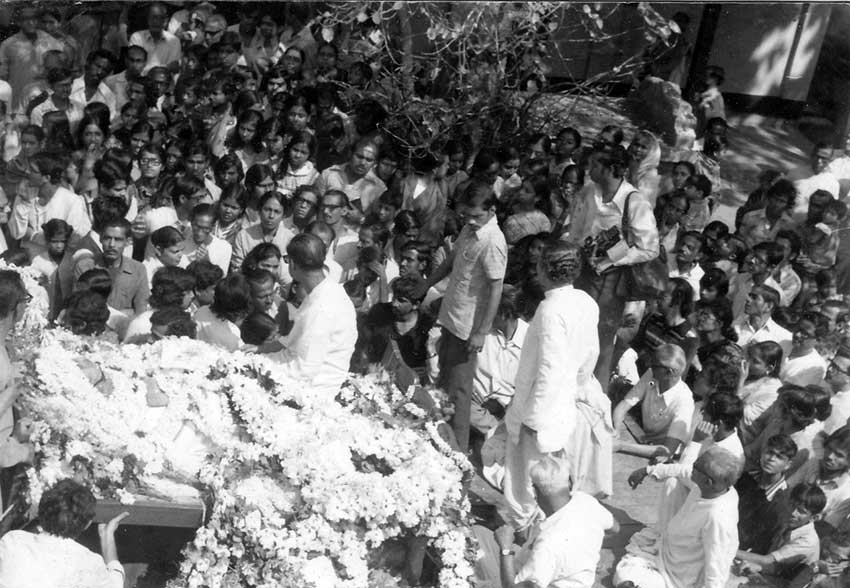
His centenary in 2005 was celebrated in style by the Government of West Bengal, and in 2006, the Government of India released a postage stamp in his honour. Each of these tributes is a reminder that the nation hasn’t forgotten its maestro.
But honestly, you don’t need a statue or a stamp to remember him. Just wake up on Mahalaya morning, switch on the radio, and there he is—Pankaj Mullick’s immortal compositions, still weaving the magic of dawn.
Closing Thoughts
Setting aside my sentiments as his grandson, when I think of Pankaj Kumar Mullick, I don’t just think of a composer or a singer. I think of a man who carried India’s soul in his voice. A man who bridged tradition and modernity with effortless grace. A man who was celebrated by the nation yet remained grounded.
In a world that often forgets its heroes too soon, it’s comforting to know that Mullick continues to live on—through festivals, through films, through history, and most of all, through the hearts of the people who still hum his songs.
He wasn’t just part of India’s story. He is India’s song.

What's Your Reaction?

A grand tribute to one of the greatest son of the soil. Very perfectly written. Yes the programme ‘Mahisashur Mardini ‘ in immortal. The Sunday Sangeet Shiksha’ was one of the favourite also. Ourvpronams to the great legend…